You have probably saved for months, booked time off work and told everyone you are going to see the northern lights in Norway. That pressure is real: with one shot at the aurora, the wrong cabin or the wrong week can turn a dream trip into a week of cloudy skies and disappointment. Choosing where you sleep matters as much as choosing when you fly.
This guide walks through Norway cabin lodges for northern lights trips, from why they beat city hotels to how to pick between Tromsø, Alta, Lofoten and Kirkenes. You will find advice on timing your dates for the best darkness and clear-sky odds, matching the lodge type to your budget and travel style, what prices typically look like per night, and a booking strategy that makes the most of every clear night. A short wrap-up pulls the whole plan together at the end.
Why Norway Cabin Lodges Are Ideal for Northern Lights Trips
The single biggest advantage of cabin lodges is darkness. Most sit in open countryside a few minutes’ drive from Tromsø, Alta or Kirkenes, far from the streetlights and shopfront glow that wash out a modest display. A KP 3 show, which is typically the level where displays become visible, can look impressive from a dark field yet barely register from a town center. Staying rural keeps that city glow behind you.
Inside the aurora oval
Many lodges in northern Norway sit inside the aurora oval, the zone between roughly 68°N and 70°N where activity concentrates. That geography changes what you see. Instead of a faint green smudge on the northern horizon, a modest KP 3 show can appear directly overhead, filling the sky above the cabin. On stronger KP 5+ nights, the whole dome lights up and direction barely matters.
There is also a practical comfort that hotel-based chasers miss. You wake up 20 steps from your viewing spot, so when the sky clears at 11 pm you simply step outside in your insulated layers, look up, and go back to bed if the show fades. No dressing for minus temperatures, no driving icy roads after a long day of activities, and no risk of missing the display while you wait for a tour bus. Some hosts even offer a wake-up aurora alarm so you can sleep until the sky actually performs.
Where to Base Yourself: Tromsø, Alta, Lofoten and Kirkenes
Northern Norway offers four distinct base regions, and each suits a different kind of traveler. The right choice depends on whether you prioritize flight connections, clear-sky odds, scenery or pure darkness. Distances between these bases are significant, so hopping between them mid-trip eats into your viewing time. Pick one region, settle in, and let the sky come to you rather than spending your evenings on winter roads. Here is how the main options compare.
- Tromsø at 69°N: the widest lodge choice plus solid flight connections, so first-time aurora chasers get town backup options like restaurants, museums and organized tours if the weather turns.
- Alta near 70°N, the City of the Northern Lights: its drier inland climate typically delivers more clear nights than the coast, which matters when every evening counts.
- Lofoten around 68°N: aurora watching paired with dramatic fjord and peak scenery, ideal if photography is the main goal and you want jagged peaks in every frame.
- Kirkenes in the far northeast: the quietest base with the fewest lodges but near-zero light pollution, best for travelers who value solitude over amenities.
If fjord scenery is what draws you, Lofoten delivers some of the most photogenic landscapes in Norway, and you can read more in our guide to Norway fjord lodges with the best views. For most first-timers, Tromsø is the safe starting point because a failed night is easy to retry with a different lodge or tour the next evening, and the city itself keeps you entertained on cloudy afternoons. Alta suits travelers who would rather gamble on drier skies than have a bigger town on hand. Kirkenes rewards repeat Arctic travelers who have already seen the classics and now want silence, snow and a sky that belongs entirely to them. Whichever base you choose, match it to your travel style before you book, because switching regions mid-stay rarely pays off in winter.
Timing Your Trip: Season, Darkness and Clear-Sky Odds
Northern Norway’s aurora season runs from late September to late March. During those months the Arctic nights are long enough to cover the prime viewing window of roughly 6 pm to 1 am, which is when displays are most commonly active. Outside the season, the midnight sun and short nights make a sighting unrealistic, so build your dates around that window from the start.
Darkness versus clear skies
December and January give you maximum darkness, but on the coast they also carry the highest cloud risk, and a thick marine cloud layer hides even a KP 5+ storm. February and March often trade a little daylight for clearer skies, which is why many experienced aurora chasers prefer late winter. The display does not care how dark it is if the clouds refuse to move.
Stay length is the other half of the equation. Book a 4–5 night stay rather than a weekend: roughly 80% of visitors who stay that long catch at least one clear-sky display, while a two-night trip leaves you badly exposed to a single cloudy front. If your schedule allows, aim for February or March with five nights, and you give yourself both better cloud odds and several chances at the 6 pm to 1 am window.
Choosing the Right Lodge Type for Aurora Watching
Not all aurora lodges are built the same, and the type you pick shapes how you actually experience the lights. Traditional timber cabins are the workhorse option across northern Norway. They offer the best value per night, usually come with a wood stove you can run all evening, and give you a genuine cabin-in-the-snow feel. The trade-off is that aurora watching happens outdoors, so you will be standing in the cold in whatever you brought. Pack proper cold-weather layers: insulated boots, a windproof shell, thick mittens and a hat that covers your ears.
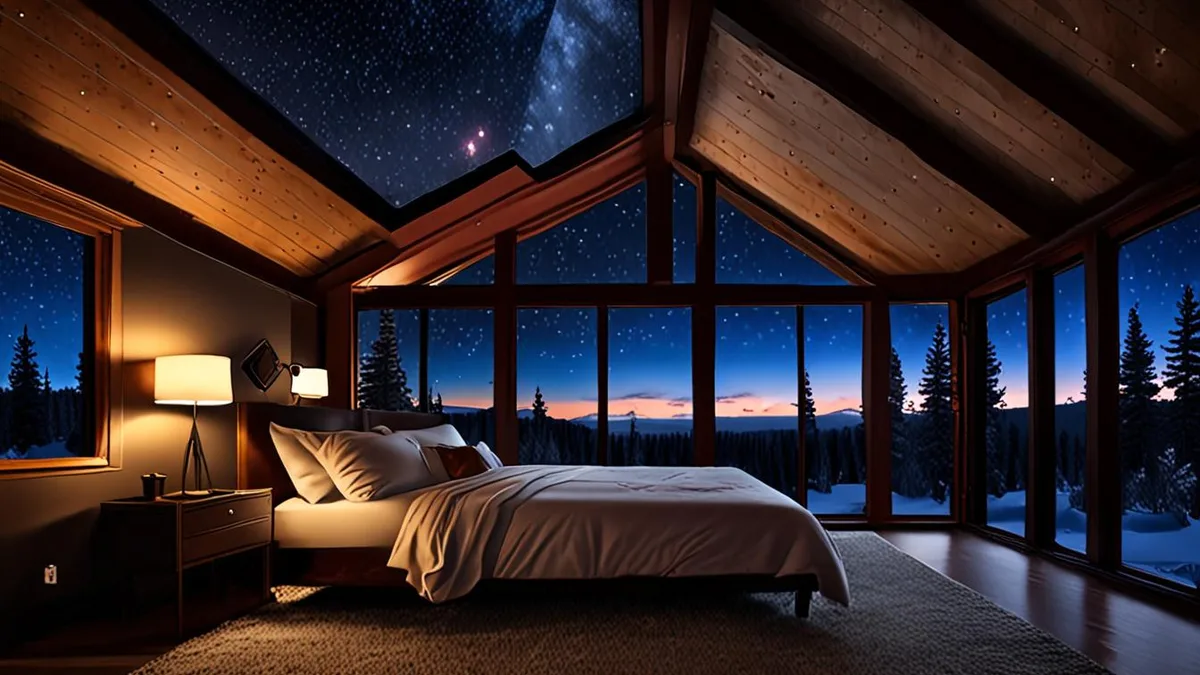
Glass-roofed and panoramic-window lodges solve the cold problem entirely. You can lie in bed and track a display as it moves across the sky, which is a real advantage on short stays when you cannot afford to miss a clear night. Photographers also appreciate them for framing shots and for staying warm between exposures, though you should check how large and clean the glass panels are before booking.
Beyond cabin style, a few practical features separate a good aurora lodge from a mediocre one:
- Open north-facing horizon — displays appear most often in the northern sky, so a clearing with no trees, buildings or mountainsides blocking that direction means you can watch from the property instead of driving out.
- Aurora wake-up alarm service — some hosts will knock on your door or call your room when the lights appear, which matters because strong shows can start after midnight and you do not want to sleep through your one clear night.
- Heated outdoor spots — a sauna, hot tub deck or fire pit lets you wait out cloudy patches comfortably and keeps you outside during a show instead of ducking back inside every few minutes to warm up.
- Red-light friendly outdoor areas — lodges that keep exterior lighting dim or use red bulbs preserve your night vision, so faint KP 3 displays stay visible rather than being washed out by the cabin’s own lights.
What Norway Cabin Lodges Cost Per Night
Simple aurora cabins in northern Norway typically run about €150–350 per night. These are the traditional timber lodges, often with kitchen access so you can self-cater and keep costs down. Expect rates to push toward the upper end of that range in December and January, when demand peaks around the darkest weeks of the season.
Glass-roofed lodges: what the premium buys
Glass-roofed and panoramic lodges cost more, usually €300–600 per night. The highest rates cluster on weekends and around Christmas and New Year, so shifting your stay to midweek dates can make a noticeable difference to your total. You are paying for the ability to watch the sky from bed, which is worth it on a short trip or if photography is the main goal.
Look at the total stay cost
Here is where budgets get blown: remote lodges often add transfers, dinners or aurora tours to the bill. A cabin that looks cheap per night may require a pricey snowmobile or boat transfer, and a half-board package can add a significant amount per person per day. Before you book, add up the room rate plus transfers, meals and any guided tours, then compare that total across lodges. Two lodges with very different room rates can end up costing nearly the same for a full stay, and the cheaper-sounding one sometimes ends up more expensive once everything is included.
Booking Strategy and Making the Most of Clear Nights
Arctic lodges with good aurora setups are a limited pool, and the ones with open north-facing views sell out first. For December through February stays, reserve 3–6 months ahead. That window is not excessive — it is simply how early the best-positioned cabins get claimed, especially around the holidays and school break weeks.
Track the forecast daily
Once you are on the ground, make the KP forecast and cloud maps part of your morning routine. The KP index tells you how strong the aurora is likely to be, with displays typically visible from KP 3 upward and strong shows at KP 5+. Cloud cover matters just as much — a spectacular forecast is useless under a solid deck of coastal cloud. Ask your host about mobile aurora alerts when you arrive; many lodges have a system for tipping off guests the moment the sky clears or activity spikes, and being able to move fast is often the difference between seeing the lights and hearing about them at breakfast.
Keep one evening free
It is tempting to book an aurora tour, a dog sledding trip and a fjord excursion back to back. Resist filling every evening. A KP 5+ show can appear on any night, and when it does, you want to be standing outside your lodge, not on a bus with a fixed return time. Leave at least one evening completely unbooked so you can react to a clear sky on your own schedule. If nothing happens that night, you have lost nothing — and if it does, you will be glad you stayed put.
Wrapping Up Your Norway Aurora Lodge Plan
If you have one shot at seeing the northern lights, the smartest move is choosing a cabin lodge rather than a city hotel. Norway cabin lodges put you inside the aurora oval, away from city glow, with the sky on your doorstep. Instead of driving icy roads at midnight, you can step outside and already be in position.
The plan is simple: pick your region first, whether that is Tromsø, Alta, Lofoten or Kirkenes, then match the lodge type and late-September-to-March dates to your budget and stay length. Book 3–6 months ahead for winter dates and plan 4–5 nights to give yourself the best realistic odds of a clear-sky display. Do that, and a wasted trip becomes the exception rather than the rule. If this helped you plan your aurora trip, leave a comment or share the article with a fellow traveler.