Booking lodge stays for large groups often falls apart for the same reason: capacity, sleeping setups and shared costs only get checked after the deposit is paid. A lodge that “sleeps 14” on paper might mean four bedrooms, two sofa beds and a single bathroom, which nobody discovers until everyone is standing in the hallway with towels on the first morning.
This guide walks through the decisions that matter before you book. You’ll learn why group lodges need different planning than a couple’s getaway, how to read bedroom layouts and bathroom counts, which lodge type fits your group’s style, and when to book to get real choice. We’ll also cover fair ways to split costs and the location checks that keep a big trip running smoothly, from parking to supermarket runs. Get these right early, and the lodge itself becomes the easy part.
Why Lodge Stays for Large Groups Need Different Planning
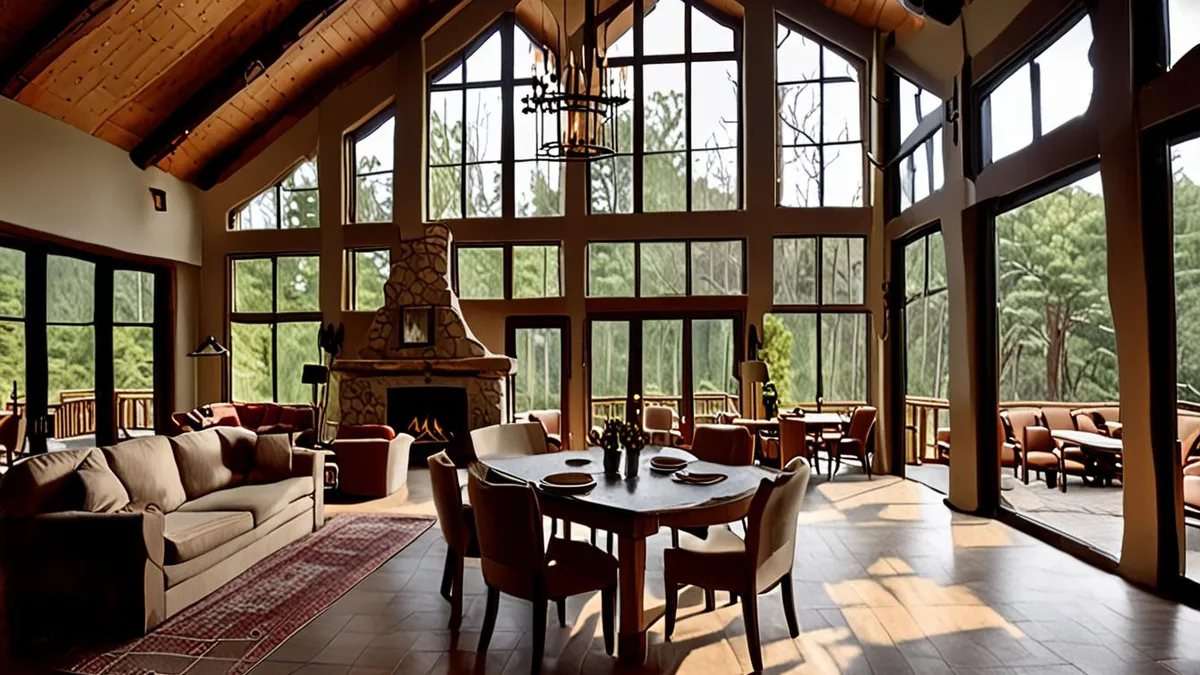
When you’re traveling as a couple, you judge a hotel on the room. When you book a lodge for a big group, you judge it on the shared spaces first. One cramped living room can ruin a week for 12 people: if everyone can’t sit down together in the evening, the group naturally splits into scattered clusters, and the whole point of gathering under one roof starts to erode.
The money side works differently too. Per-person pricing on a group lodge often beats per-room pricing by 20-40%, but that saving only holds if the capacity is genuinely used. Book a lodge that sleeps 16 for a group of 9, and you’re paying for empty beds with no benefit. Before comparing rates, confirm your final headcount and match it to the property’s real size.
What matters most for group dynamics
Star ratings tell you surprisingly little about how a large group will experience a lodge. What shapes the week are the things ratings rarely capture: enough bedrooms so nobody feels stacked in, enough bathrooms so mornings don’t turn into a queue, and a kitchen where more than two people can work at once. A modest three-star lodge with generous shared space will outperform a fancier property where the whole group fights over one shower and one dining table. Focus your research there, and the stars can take care of themselves.
Check Sleeping Capacity and Bedroom Layouts First
Capacity numbers on listing sites can be misleading. A lodge advertised as sleeping 12 may have only 4 bedrooms, with the remainder crammed onto bunks, sofa beds or a mezzanine mattress. That works fine for a group of friends in their twenties and badly for almost everyone else. Before you pay any deposit, ask the owner or agent exactly how the sleeping capacity breaks down and confirm the bed configurations room by room: doubles, twins, bunks, or sofa beds. Get the answer in writing, ideally with a floor plan, so there is no confusion later about who sleeps where and on what.
Bathrooms deserve the same scrutiny, because they cause more group friction than bedrooms do. A comfortable benchmark is one bathroom per 4 guests. Twelve people sharing two bathrooms means morning routines stretch into shifts; twelve people with three bathrooms barely notice each other. Ask whether the count includes a downstairs cloakroom or an en-suite, since these vary in usefulness. Also check the water heating setup, because large groups taking back-to-back showers can drain a small hot water tank faster than anyone expects.
- Ask for photos of every bedroom, not just the main ones — listings often show the two best rooms and skip the bunk room entirely.
- Check which bedrooms are on which floor, since older guests and anyone with limited mobility will care about stairs and distance to a bathroom at night.
- Confirm whether sofa beds are in shared living spaces, which means someone in your group sleeps with the lights on and zero privacy.
- For mixed groups of couples, families and singles, look for lodges with at least 3-5 bedrooms and en-suite options, so couples and older guests get a comfortable room rather than a bunk.
- If anyone in the group snores, mention it now: assigning the sofa bed sleeper fairly is much easier before arrival than after.
Match the Lodge Type to Your Group’s Style
Not all lodges suit all groups, and the biggest booking mistakes come from matching the wrong property type to the wrong crowd. Think honestly about how your group spends time together before you start comparing listings.
Self-catering timber lodges
Self-catering timber lodges are the natural pick for cooking-focused groups who plan big shared dinners and lazy breakfasts. The one detail that decides whether this works is dining space: verify the kitchen or dining area seats everyone at once. A table for six with the remaining guests balancing plates on their laps gets old by the second night. Check the oven size and cookware too, since catering for 10+ is a different job than a family of four.
Multi-unit complexes and activity lodges
Multi-unit lodge complexes suit groups who want a bit of privacy plus a shared gathering space. Each couple or family gets their own unit with a bedroom and bathroom, and the group comes together in a communal lodge, terrace or dining area. It costs a little more than one big shared building, but it removes most of the friction around noise, morning routines and shared bathrooms.
Activity-based lodges — ski, lakeside or mountain properties — bundle facilities like equipment storage, saunas or direct trail access, which saves your group organizing it separately. For winter trips, it’s worth reading a dedicated guide on how to choose a ski lodge in the Alps before committing. The catch with activity lodges is the non-active members: check there are comfortable lounges, walks or spa options for whoever sits out the hiking or skiing, or they’ll spend the week bored on a sofa.
Timing: When to Book Lodge Stays for Large Groups
Timing makes or breaks a large-group lodge booking. The biggest properties that sleep 10 or more people get snapped up early, especially for peak windows like July-August summer holidays and the December-February ski season. For those dates, plan on a lead time of 6-12 months. If you start searching three months out, you will usually find leftover single units rather than one lodge that fits everyone together, which defeats the purpose of booking as a group.
Shoulder seasons give groups more room to negotiate
If your dates are flexible, aim for May-June or September-October. Availability is noticeably wider for groups of 10+, and rates tend to soften once families with school-age children go home. Shoulder-season trips also make it easier to negotiate extras like a late checkout or early access, since managers are less stretched. For lake destinations, early September often delivers warm water and quiet shorelines; a good example of what to expect is Finland lakeside lodges for summer holidays, which show how rewarding the stretch just past peak can be.
Finally, check minimum stays before you fall in love with a property. Many group lodges require 2-3 nights as a baseline, rising to 3-7 nights in high season. A weekend-only plan can quietly rule out half your shortlist, so confirm the minimum for your exact dates with the host before comparing prices.
Budgeting and Splitting Costs Fairly
Money is where group trips get tense, so sort the budget before you start browsing. Set a per-person ceiling that everyone agrees to, then search only within it. This keeps the conversation factual instead of emotional when one member suggests a place at double the original plan. Because group lodges usually cost less per head than booking individual rooms, a realistic ceiling often buys more comfort and space than people expect, so it pays to frame the budget around value rather than just the nightly rate.
The security deposit deserves its own conversation. For group bookings, deposits commonly range from €300-€1,000, and hosts may hold it against a single card or split it across several. Agree in writing who pays it, who gets it back, and what happens if damage occurs and no one owns up. Ask the host or property manager exactly what the deposit covers, how long the refund takes after checkout, and whether wear-and-tear is treated differently from actual damage. Vague arrangements here are how friendships get strained over a single broken chair, so put the details in a shared message everyone can find later.
- Use a shared payment app from day one. Tools that split expenses let everyone pay their share directly, so one person isn’t fronting the full balance and chasing friends for weeks afterward. Settle the deposit through the same system so the record stays in one place.
- Check cancellation terms for partial dropouts. Some properties treat a group booking as all-or-nothing; if two people pull out, ask whether you can reduce capacity, swap names on the booking, or recover a proportional refund. Get the answer before you pay anything, not after.
- Collect a small group kitty for extras. Firewood, cleaning add-ons and replacement keys are common lodge costs that never appear in the headline price. A modest pot, topped up as needed, avoids a dozen awkward micro-transfers at the end of the trip.
Location and Practicalities for Group Logistics
A perfect lodge in the wrong location creates daily friction for a large group. If people are arriving in separate cars, prioritize lodges within roughly 30-60 minutes of an airport or a major road. Long, winding final approaches are fine for one shared vehicle, but a convoy of tired drivers arriving after separate workdays will feel every extra kilometer.
Parking and supplies matter more than you think
Before booking, confirm the property can actually park 3-5 vehicles. A lodge with a beautiful gravel courtyard may fit two cars comfortably and leave everyone else on a narrow lane. Also check the drive to the nearest supermarket: aim for within a 20-30 minute drive, because group cooking means multiple shopping runs, and a forgotten loaf of bread shouldn’t cost an hour of your evening.
Remote forest and mountain lodges are wonderful for quiet retreats, and destinations like Wales mountain lodges for adventure trips show how rewarding that isolation can be. But remoteness has logistics attached: someone needs to be a designated driver for evenings out, or you should pre-arrange transfers with a local operator. Check mobile signal coverage too, since coordinating 10+ people by group chat falls apart quickly in a dead zone.
Wrapping Up Your Group Lodge Choice
Most large-group lodge bookings fall apart because the essentials get checked after the deposit is paid, not before. Flip that order around: confirm the lodge genuinely sleeps your group with a sensible bedroom layout, and that the living and dining spaces work for 10 or more people, before anyone sends money. Capacity, bedroom layouts and shared spaces decide whether a large-group lodge works.
Timing and money close the loop. Booking 6-12 months ahead secures peak-season options at 20-40% lower per-person cost, and agreeing upfront who collects the security deposit and how costs are shared keeps friendships intact. Add a quick check on parking, driving distances and the nearest supermarket, and those practical details turn a good lodge into a stress-free group trip. If this helped you plan your own group stay, leave a comment or share the article with whoever is doing the organizing.