Picture this: you booked a lodge months ago, promised yourself a quiet escape with a hot tub and a forest view, and then you arrive to find the next unit a few meters away, a shared deck wall, and a busy path running right past your terrace. It is one of the most common letdowns in lodge travel, and it is almost entirely avoidable.
Lodge neighbors and privacy vary enormously between sites, and the listing photos rarely tell the whole story. In this guide, we cover why some sites feel crowded while others feel truly secluded, how to read site maps and unit placement before you book, what guest reviews reveal about noise and sightlines, which dates give you the best odds of an empty stretch of woodland, and the exact questions worth asking a host. A few minutes of checking can be the difference between a private retreat and a terrace on display.
Why Lodge Neighbors and Privacy Vary So Much Between Sites
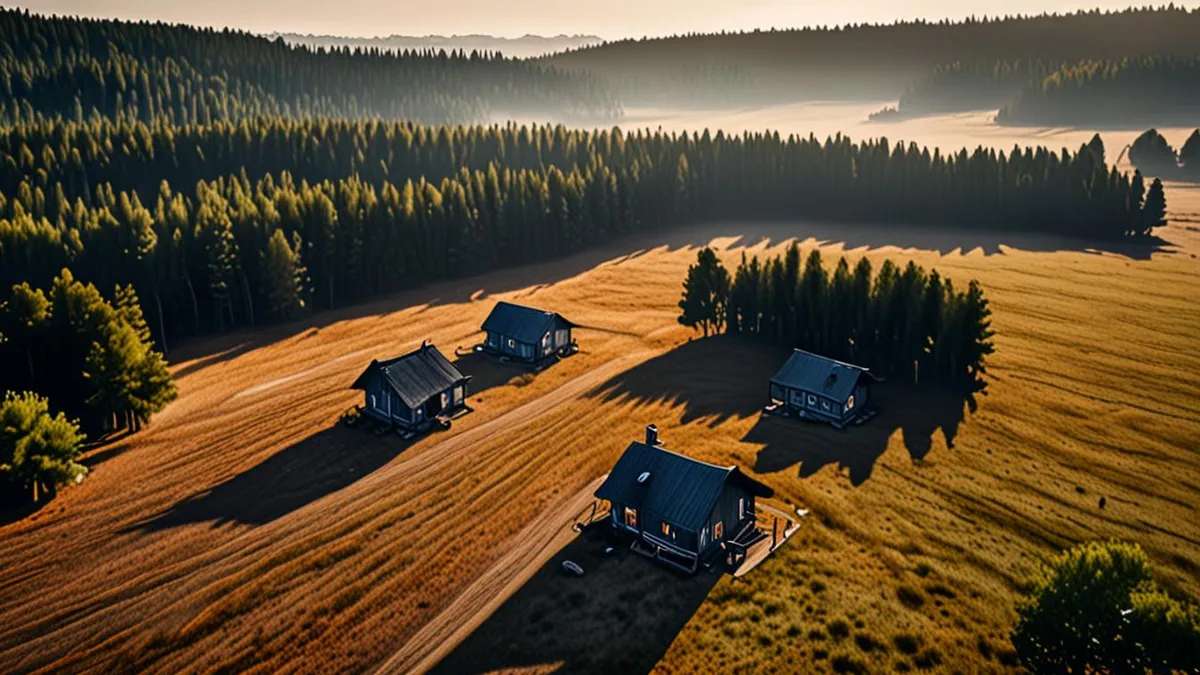
Not all lodge sites are created equal, and the differences start with the original layout. Some developments pack units into dense clusters, with terraces just meters apart and hot tubs practically in conversation with each other. Others scatter cabins widely among trees, so you hear wind and birdsong instead of a neighbor’s playlist.
Purpose-built parks versus independent cabins
Purpose-built holiday parks tend to follow a predictable pattern: rows of identical lodges, often angled the same way, on plots carved from open ground. That format keeps costs down and maintenance simple, but it does little for seclusion. Independent cabins on privately owned land usually offer far more privacy, because the owner chose the plot and the spacing rather than fitting units into a master plan.
Why terrain can change everything
Terrain matters as much as distance. On a sloped site, the lodge above you may look straight down onto your terrace even if it sits a respectful distance away. Dense forest, natural banks and lakeshore plots can shield units that sit close together on a map, while a flat, cleared site can leave two distant lodges in full view of each other. When you compare listings, try to picture the actual ground: trees, slopes and water edges often do more for privacy than sheer distance between buildings. This is exactly why a site map and a few direct questions to the host, covered later in this article, are worth your time before you pay.
Reading Site Maps and Unit Placement Before You Book
Before you book, the single most useful thing you can do is get a proper look at where your unit actually sits. Asking the host for a site map or details of unit placement is a standard request, and a host who answers it clearly is usually a host who runs a well-organized site. It takes one short email, and it tells you far more about the real layout than any listing photo ever will.
- Request a site map showing your unit’s position. Ask for one that marks your lodge relative to neighboring units, walking paths and shared facilities. A simple diagram is enough; what matters is that you can see the boundaries around your terrace, where the paths run and which units sit closest to yours.
- Aim for corner units, end-of-row lodges or units backing onto forest or water. These positions typically have fewer shared boundaries than mid-row units, which means fewer neighbors directly beside or behind you. Terraces facing forest or water typically offer the most privacy, while units facing internal paths offer the least, since foot traffic passes by all day.
- Check what your terrace faces. An internal road, a playground or a pool are the highest-traffic spots on any site. A lovely lodge can still feel exposed if its outdoor seating looks straight onto one of them, so ask specifically which way your terrace is oriented before committing.
- Confirm the distance to the nearest neighboring lodge. Ask directly whether any walls, decks or terraces are shared with the next unit, since a shared structure changes the feel of a stay completely. If your dates fall in peak season, remember that lodges are fullest then and units sit closest together in use, so the map matters even more.
Once you have these answers in hand, you can judge the listing on its real layout rather than its best-angle photos. Sketch the site out for yourself, mark where your terrace sits, and picture a full-occupancy week. If a host is vague or evasive about unit placement, treat that as useful information too, and consider looking elsewhere.
Using Reviews to Spot Noise and Privacy Problems
Guest reviews are where a site’s true layout shows itself. Official photos are chosen for their best angles, but reviewers write about what actually bothered them, and privacy problems come up again and again in the details.
Search smart, read patterns
Use the review search function and look for words like “noise”, “thin walls”, “close together” and “hot tub”. Hot tubs and outdoor seating areas are the most common privacy complaint in lodge reviews, so pay particular attention to those mentions. A few isolated comments are normal for any property; what should raise a red flag is more than a small handful of reviews mentioning noise or thin walls, especially when the complaints repeat across different seasons. That pattern points to a layout problem rather than one unlucky weekend or one noisy group.
Prioritize peak-season reviews and guest photos
Recent reviews from peak season are the most telling of all. In July-August, lodges are at their fullest, and that is when you see how close units actually feel in use. A site that feels spacious at half occupancy can feel like a terrace-to-terrace neighborhood when every lodge is booked. Finally, look at photos posted by past guests rather than just the listing gallery. Candid shots often reveal sightlines between terraces, the gap to the next unit and what your window or hot tub would actually overlook, which is exactly the information the official images tend to leave out.
Timing Your Stay for Maximum Seclusion
When you book matters almost as much as where you book. Lodge sites that feel cramped at full occupancy can feel pleasantly spacious when half the units sit empty, and the calendar is the main lever you control. The peak season of July-August fills family-friendly lodge parks to capacity, which means every terrace, hot tub and path is in use at once.
Shoulder months like May-June and September-October are the sweet spot for privacy. Sites rarely run at full occupancy in these windows, so the lodge next door is more likely to be empty and the shared facilities quieter. Even at dense, purpose-built parks, real spacing improves simply because fewer neighbors are around to hear your evening conversation on the deck.
Weekends are the second pressure point. Sites typically run at full occupancy from Friday to Sunday even in busier months, while midweek stays feel noticeably calmer. If your dates are flexible, a Monday-to-Friday booking often delivers the seclusion of shoulder season at peak-season prices.
- Check local school holiday calendars before booking, since family lodges in July-August tend to book out completely during those weeks, filling playgrounds and pools all day.
- Ask the host which units are already booked for your dates, so you know whether the lodge beside yours will be occupied or standing empty.
- Book early morning check-ins or late checkouts when offered, since arrival and departure days are when terraces and car parks see the most foot traffic.
Questions to Ask the Host About Lodge Neighbors and Privacy
Hosts can answer in thirty seconds what reviews and maps might never reveal, so a short pre-booking conversation is worth the effort. Most hosts expect questions about unit placement, and asking for a site map or unit position is a standard request, not an awkward one. Be direct and specific rather than asking vaguely whether the site is “quiet”.
Start with the layout itself. The nearest occupied lodge, and whether it shares a wall, deck edge or fence line with your unit, tells you more than any marketing photo. Construction is the other blind spot: a new lodge block going up beside your terrace can undo every other privacy advantage the unit has.
Then move to the details that shape day-to-day comfort. A unit can be well spaced on the map yet still look straight into the neighboring hot tub, and complaints about hot tubs and outdoor seating areas top the privacy issues guests raise in lodge reviews. Screening, hedging and deck orientation vary enormously between units on the same site.
- Ask whether the site enforces written quiet hours and how they are handled, since a policy on paper means little without enforcement.
- Check whether any events, weddings or large group bookings are scheduled during your dates, as these can fill shared areas and carry sound across the whole site.
- Request a unit whose terrace faces forest or water rather than internal paths, since terraces facing forest or water typically offer the most privacy.
- Confirm whether your unit’s parking spot sits beside the terrace or away from it, because cars pulling in and out nearby break the sense of seclusion more than guests expect.
Matching Lodge Type to the Privacy You Want
The type of lodge you choose sets the ceiling on how private your stay can be. A standalone cabin in forest or on a lakeshore plot gives the strongest seclusion, especially for couples and quiet retreats, because there are no shared boundaries at all and neighbors are often out of sight entirely. If privacy is your top priority, this is the category to search first, and lakeside lodges in Finland show how much distance and tree cover can add to a summer stay.
Resort-style parks: convenience at a cost
Lodges inside resort-style parks trade privacy for facilities such as pools, restaurants and kids’ activities, which is a fair deal for many travelers but a poor one if seclusion is the goal. Unit density varies widely between these parks, some spacing lodges generously among trees while others line them up in rows a few meters apart. Check unit density before booking rather than assuming, and lean toward lodges at the edge of a row or on a corner plot, where fewer sides of your cabin sit next to someone else’s.
Terrain and orientation
Mountain and fjord lodges often enjoy natural separation from the landscape itself, with slopes, rock and vegetation shielding one unit from the next. Terrain helps, but it does not guarantee a private terrace: a cabin can sit far from its neighbor yet face directly across an open slope. Verify terrace orientation before booking, and remember that terraces facing forest or water typically offer the most privacy, while units facing internal paths offer the least. A two-minute question to the host about sightlines will tell you whether the view from your morning coffee spot is trees or someone else’s deck.
Wrapping Up Your Privacy Check Before Booking
Nobody books a lodge hoping to share a wall with strangers or watch a busy path from the hot tub. Yet that is exactly what happens when travelers book on photos alone. The good news is that this disappointment is mostly preventable with a little homework before you pay.
Checking lodge neighbors and privacy comes down to four things: the site map, guest reviews, timing and direct host questions. Shoulder-season dates and corner or edge units give the best odds of a genuinely secluded stay, especially at denser sites. And a short pre-booking conversation with the host prevents most privacy disappointments before they ever happen. If this guide helped you plan a quieter trip, leave a comment or share it with a fellow traveler.