Many travelers want to cook some of their own meals on the road, whether to save money, eat healthier or simply enjoy a quiet dinner in. The problem is that hotel listings rarely make it clear what you are actually getting. A room described as having a kitchen might mean a full setup with an oven, or it might mean a kettle, a microwave and not much else.
This guide walks you through the whole process of finding genuine hotels with kitchens and kitchenettes. You will learn what the terms kitchenette and full kitchen actually mean, which hotel types are most likely to include cooking facilities, and how to filter and search on booking sites so you do not waste time. We will also cover the questions to ask a property before booking, when the premium for a kitchen room is worth paying, and the destinations and booking timing that give you the best choice of self-catering rooms.
Hotels with Kitchens vs Kitchenettes: What the Terms Actually Mean
The words matter more than you might think, because booking sites and hotels use them loosely. Knowing the difference between a kitchenette and a full kitchen helps you judge whether a room will actually work for the meals you plan to cook.
Kitchenette vs full kitchen
A kitchenette typically means a cooktop, a sink, a mini fridge and basic cookware. That is enough for pasta, eggs, simple one-pan dinners and morning coffee. A full kitchen adds an oven and a full-size fridge, which opens up roasting, baking and proper grocery shopping for longer stays. If your plans involve anything beyond two-burner cooking, a kitchenette may frustrate you.
Beware of “kitchen facilities”
Some listings advertise kitchen facilities that turn out to be a shared communal kitchen down the hall, not an in-room setup at all. That can be fine if you only want to reheat food, but it is a very different experience from cooking in your own space, and shared kitchens can be busy at peak times.
The most reliable check is the room photo gallery, not the amenity list. Look for photos of the actual room type you are booking and count what you can see: a cooktop, a sink, a fridge, pots and pans. If the photos only show a kettle and a coffee machine, assume that is all there is and ask the property directly.
Which Hotel Types Come with Kitchens
If you want a kitchen without playing detective, start with the hotel categories that build them in as standard. Apart-hotels and aparthotels are the most reliable options, because they combine hotel services like reception and housekeeping with self-catering units designed for longer stays. Serviced apartments work the same way, and extended-stay brands almost always include at least a kitchenette in every room.
Standard city hotels are a different story. Most of them simply do not have kitchen rooms in their inventory, which is why a generic hotel search so often returns nothing useful. The trick is to treat the kitchen as a room amenity rather than a hotel facility: filter by “kitchen” or “kitchenette” at the room level and you will surface rooms that a hotel-level search hides. A few other categories are also worth knowing as you search:
- Residence-style aparthotels: these often sit in residential neighborhoods, so you get a grocery store nearby and a quieter street than the main hotel district.
- Weekly housekeeping models: many extended-stay properties clean rooms once or twice a week rather than daily, which suits some travelers and annoys others.
- Studio vs one-bedroom units: in aparthotels, studios usually have a compact kitchenette along one wall, while one-bedroom units more often get a full kitchen.
Once you know these categories, searching becomes much faster. Instead of scrolling through hundreds of standard rooms, you can head straight to the property types that actually deliver a usable cooking setup.
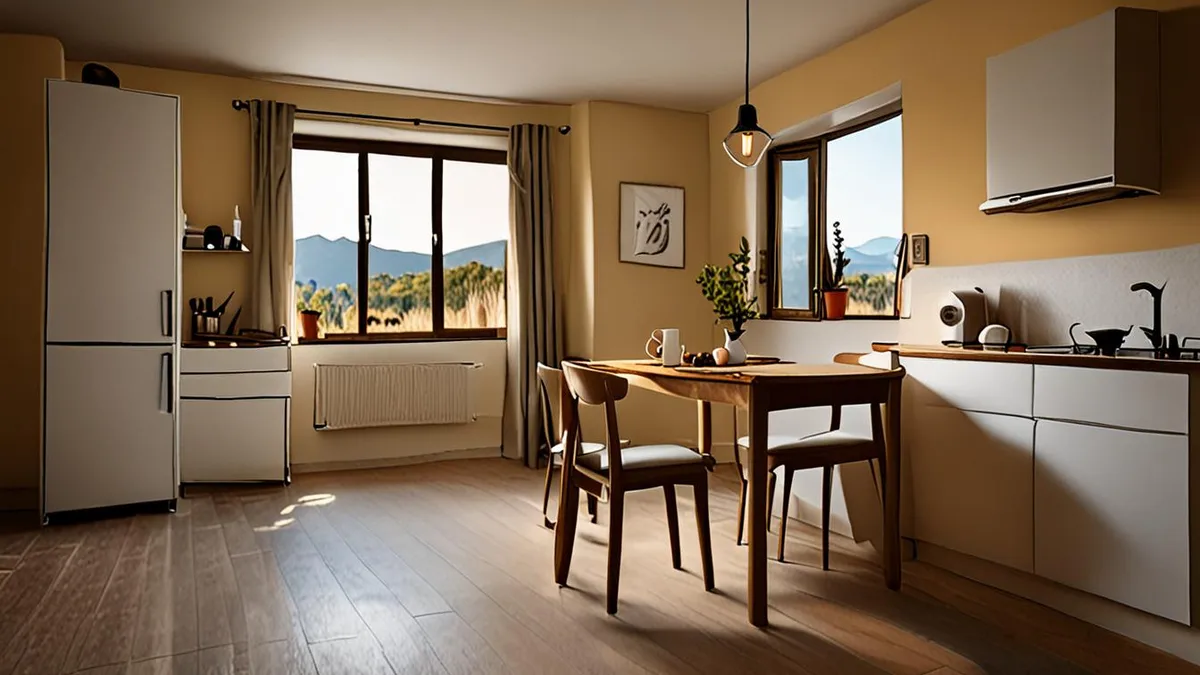
How to Search and Filter for Kitchen Rooms on Booking Sites
Booking sites have the tools to find kitchen rooms, but they only work if you use them at the right level. A short, systematic search saves hours of clicking through unsuitable listings. The trick is to treat the filters as a starting point rather than a guarantee, because kitchen-equipped rooms are a small slice of most hotels’ inventory and are often described inconsistently from one site to the next.
- Apply the room-level filter. On major booking sites, choose “kitchen” or “kitchenette” as a room filter, not a hotel filter. This narrows results to properties that have at least some kitchen-equipped rooms.
- Re-check the specific room description. Filters are not perfect, and some sites apply them loosely. After filtering, open the room you plan to book and read its own description to confirm the kitchen is in that room type.
- Search with the right terms. Typing “aparthotel”, “studio with kitchen” or “extended stay” into the destination field surfaces far more relevant results than a generic “hotel” search, because it targets the categories that build kitchens in.
- Mine recent guest reviews. Read the newest reviews and search them for words like “kitchen”, “cookware” and “fridge”. Guests often mention a missing oven or a tiny fridge that the listing glossed over.
The review step is the one most travelers skip, and it is the one that catches mismatches. A listing can look perfect in photos while recent guests complain that half the cookware was missing or the kitchenette was smaller than expected. Ten minutes of reading reviews before you book is far easier than discovering the truth after check-in, when your options are limited to whatever the front desk can offer.
It also helps to run the same search on more than one platform. The same property can list its rooms differently on each site, so a kitchenette that is buried on one booking site may be clearly labeled as a room amenity on another. If two sites show the same room, compare the amenity lists side by side and use the more detailed one to decide. Finally, sort results by guest rating rather than price alone. A slightly pricier room with consistent reviews about a well-equipped kitchen is usually a better deal than the cheapest listing with vague photos and no guest feedback about the cooking setup at all.
What to Confirm Before You Book a Hotel Kitchen
Photos and filters can only tell you so much. Before you commit to a kitchen room, send the property a short email with your specific questions. Listings often leave out the details that matter most once you arrive, and a two-minute message now can save you a frustrating week of cooking pasta in a coffee mug.
The first thing to pin down is what actually comes with the kitchen. A kitchenette with an empty counter is far less useful than one stocked with the basics, so ask directly. Also confirm whether the kitchen is private to your unit or shared with other guests, since some properties advertise “kitchen access” that really means a communal room down the hall.
Housekeeping is the second big question. Some hotels treat the kitchenette as part of daily cleaning; others skip it entirely unless you request it, which matters on longer stays when dishes pile up. It also helps to know your food-shopping situation before you arrive, not after.
Finally, ask about deposits. Apartment-style properties commonly hold a refundable deposit against damage to the kitchen unit, and you want to know the amount and payment method in advance so it doesn’t surprise you at check-in.
- Cookware and utensils: Ask how many pots, pans, plates and sets of cutlery are provided, and whether there is a kettle, toaster and microwave, since these small appliances vary widely between units.
- Dish soap and basics: Confirm whether dish soap, sponges, salt and oil are supplied, or whether you should buy them on arrival, as many properties empty the kitchen between guests.
- Cleaning schedule: Ask whether housekeeping washes dishes and wipes counters as part of daily service, whether towel and linen changes are included, and if extra cleaning costs anything.
- Grocery access: Request the name of the nearest supermarket or market, how far it is on foot, and its typical opening days, so you can plan your first shop.
- Deposit terms: Check whether the deposit is taken as a card pre-authorization or cash, when it is refunded, and whether it is per room or per stay.
When Kitchen Rooms Are Worth the Extra Cost
Kitchen rooms are rarely a bargain at first glance. In the same hotel, a room with a kitchenette or full kitchen typically costs 10–30% more than a standard room, and it’s tempting to skip the premium and eat out instead. Whether that premium pays off depends almost entirely on how long you’re staying and how you like to travel.
When the math works in your favor
On trips of a week or longer, cooking your own meals can cut your food costs by roughly 30–50%. Even a modest routine — breakfast in the room, a packed lunch for day trips, and cooking dinner a few nights a week — adds up quickly. On a seven-night stay, those savings usually wipe out the room premium several times over, with money left for a nicer dinner out.
Longer trips also spread the fixed costs of a kitchen stay: the one-time grocery run, the deposit hassle, the time spent shopping. The longer you stay, the less each of those inconveniences matters.
When it probably doesn’t
For a city break of one or two nights, a kitchenette rarely pays off. You’ll spend more time shopping and cooking than the savings justify, and you may not even use the cooktop. The main exception is when hotel breakfast prices are very high — in that case, a kitchenette with a fridge for milk and yogurt can quickly cover its own cost. Otherwise, for short stays, put the money toward a well-located standard room and enjoy eating out.
Booking Timing and Destinations Where Kitchen Hotels Are Common
Kitchen-equipped rooms are a small share of total hotel inventory, so they tend to sell out before standard rooms do. If you’re traveling in summer, book 2–3 months ahead. Waiting until a few weeks before departure often leaves you choosing between overpriced kitchen rooms and ordinary hotels without one.
Destination matters too. Some regions have a naturally strong supply of aparthotels and serviced apartments, which makes finding a room with a kitchen far easier than in a typical business-hotel city. Lake and mountain destinations are especially good bets: fjord-side towns in Norway and the High Tatras in Slovakia both have a well-developed self-catering tradition, with properties built around guests who stay a week or more and cook for themselves.
City trips can work just as well, provided the stay is long enough. Students on semester visits, remote workers on month-long assignments, and families on extended city breaks get the most out of kitchen rooms — the premium is spread over many nights, and the savings on food are at their largest.
- Mountain regions: In places like the High Tatras, many properties are designed for hikers and families staying a full week, so kitchenettes and full kitchens are standard rather than an upgrade — see High Tatras hotels for mountain views for what to expect.
- Nordic destinations: Norway’s fjord towns have high restaurant prices, so aparthotels with kitchens are popular with locals and visitors alike — but book early, as summer supply is limited.
- Off-season advantage: Outside peak summer, kitchen rooms are easier to find and the booking window can be shorter, though weekends in mountain areas still fill up fast.
- Long-stay discounts: Many aparthotels offer reduced nightly rates for stays of a week or a month, which can shrink or erase the usual kitchen premium — ask the property directly about weekly and monthly pricing.
Wrapping Up Your Search for a Hotel with a Kitchen
Finding a hotel where you can actually cook comes down to three habits: reading the room photos carefully, filtering at the room level rather than trusting the hotel’s amenity list, and sending a short message to confirm the details. Remember that a kitchenette and a full kitchen are not the same thing, and that some listings only offer a shared communal kitchen instead of an in-room setup. Aparthotels and extended-stay properties remain the safest categories to search in.
The money side usually works out too. Kitchen rooms tend to run 10–30% more than standard rooms in the same property, but if you’re staying a week or more, cooking even some of your meals can cut food costs by roughly 30–50%, which more than covers the difference. For summer travel, book 2–3 months ahead, since kitchen-equipped rooms are a small share of inventory and sell out first. If this guide helped you plan a trip, share it with a fellow traveler or leave a comment below.