You arrive back at your room at 4pm and the bed is still unmade, the towels from yesterday are piled in the corner, and nobody has told you whether cleaning is even scheduled today. If you have ever wondered what hotel housekeeping actually owes you, how often your room should be refreshed, or whether you can say no thanks to daily service without causing trouble, you are not alone. Most travelers guess at these answers, and that guesswork leads to frustration on both sides of the door.
This guide walks you through the standard service you can reasonably expect, the typical cleaning schedule and how to request a time that suits you, and what to do when the service falls short of the mark. It also covers how to opt out of daily housekeeping, the privacy and tipping etiquette worth knowing, and the situations where skipping service makes sense and where it really does not. By the end, you will know exactly what to ask for and when.
What Hotel Housekeeping Owes You: The Standard Service
At most hotels, daily room cleaning is part of the deal, and it covers more than a quick tidy. A standard service includes making the bed, cleaning the bathroom, emptying the rubbish, vacuuming the floor and restocking your toiletries. Fresh towels are typically replaced daily or every other day, while bed linen is usually changed every 2-3 days in mid-range properties.
It helps to understand what this involves behind the scenes. A full clean of an occupied room usually takes housekeeping around 20-30 minutes, which is why rooms are cleaned in a rolling order rather than all at once. If your room looks barely touched after a rushed five minutes, something has been skipped, and you are entitled to ask for it to be done properly.
The range across hotel types
Not every property follows the same rhythm. Resort and 5-star properties often add an evening turndown service on top of the daily clean, with refreshed towels and sometimes a small touch like blinds drawn for the night. Budget hotels, on the other hand, may only clean rooms every 2-3 days, so check what your rate includes when you book.
The practical takeaway is simple: daily cleaning with the full list of tasks above is the normal standard at most hotels. If any part of it is missing on a day when service is scheduled, that is a fair thing to raise with reception rather than something you simply put up with.
How Often Your Room Should Be Cleaned and When
Housekeeping teams normally work roughly 9am-3pm, which means your room will usually be cleaned sometime within that window rather than at a fixed hour. The order in which rooms are done depends on checkout schedules and the team’s route, so there is some natural variation from day to day. Knowing this rhythm helps you plan your morning without being caught mid-shower by a knock on the door.
Request a time that works for you
You do not have to accept whatever time the trolley happens to pass by. Most hotels will happily fit you in if you ask, so stop by reception in the morning and request a preferred cleaning window within the team’s working hours. If you work from the room in the mornings or like a long, unhurried breakfast, asking for a late-morning or early-afternoon slot makes the whole stay more comfortable.
One thing to check upfront is the linen and towel schedule. Many hotels now default to less frequent changes as an eco measure, which surprises travelers who expect fresh towels every day. Simply ask what the schedule is, and request more frequent changes if you want them; most properties will accommodate the request without fuss.
If late afternoon arrives and your room still has not been touched, do not wait and hope. Ask reception to prioritize your room so it gets cleaned before you head out for dinner. A quick word at the desk almost always sorts it out faster than a note left on the door, and it also gives staff enough time to finish before their shift winds down.
When Service Falls Short: Getting Problems Fixed
When something goes wrong with your room, the timing of your complaint matters more than almost anything else. A problem raised the same day can be fixed while you are still there to benefit from it; the same problem raised at checkout helps nobody, since the hotel has no chance to make things right during your stay. The good news is that getting issues sorted is usually quick if you go about it in the right way, and most front desk teams would much rather hear about a problem at two in the afternoon than at checkout the next morning.
- Report the problem to reception the same day. Missed cleaning, a dirty bathroom or missing towels should all go to the front desk as soon as you notice. Same-day reports are easy for staff to act on, and they create a record while the issue is fresh. If the room has not been cleaned by late afternoon, mention it then so it can be prioritized.
- Ask for a specific remedy. Vague complaints drift; specific requests get action. Ask for a re-clean of the room, fresh towels delivered within the hour, or a room change if the hygiene problem is serious enough that a re-clean will not fix it.
- Photograph genuine hygiene issues. A quick photo of the actual problem makes your complaint concrete and easy to escalate if the first response is unsatisfactory. This is not about collecting evidence for drama, it is about describing exactly what happened without any back-and-forth.
Most hotels will resolve a same-day complaint quickly, because a clean room is the core of what you are paying for. Stay calm and factual, state clearly what you would like done, and give staff a reasonable chance to fix it before escalating further. If the first response is slow, a polite follow-up at reception usually moves things along. Calm, specific and documented beats long and angry every time, and you will usually find the fix arrives faster than you expected.
How to Opt Out of Daily Housekeeping
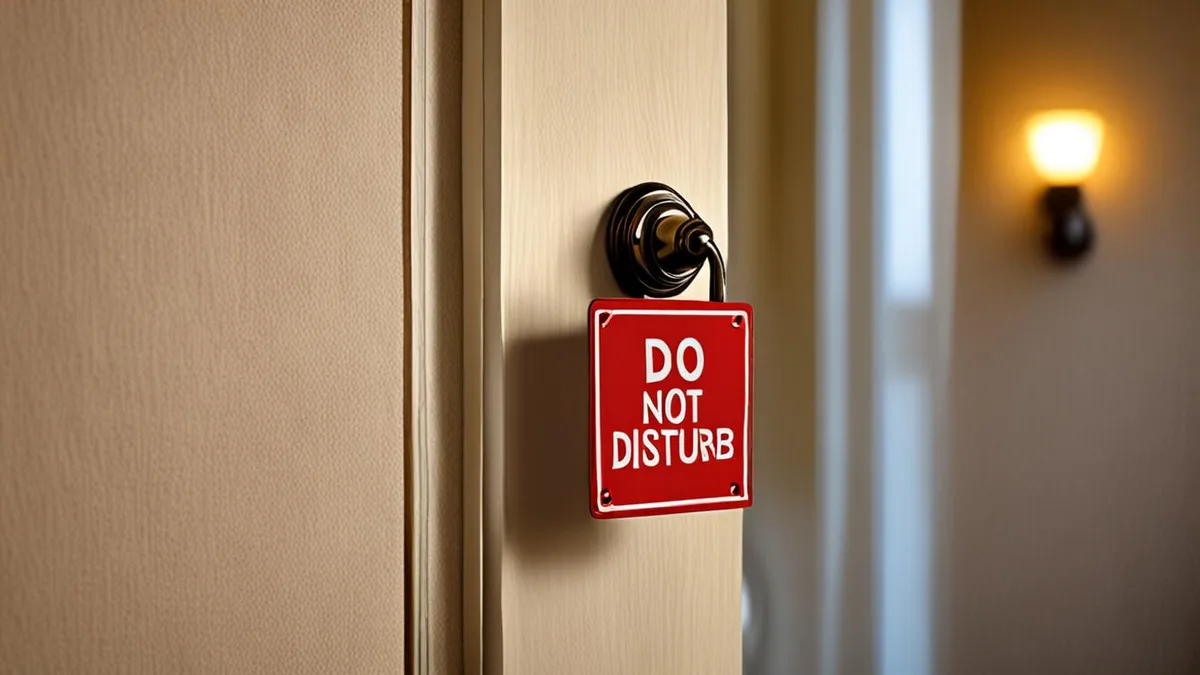
Skipping daily housekeeping is easier than most travelers realize, and it costs nothing at the vast majority of hotels. There are two simple ways to do it: tell the reception team in the morning that you don’t want service today, or hang the do-not-disturb sign on your door before housekeeping’s usual round. Either method works, and you can change your mind from one day to the next.
It’s worth asking at check-in whether the hotel participates in a green-stay style program. Some properties thank you for skipping service with a small perk, such as a drink voucher, loyalty points or a modest credit toward food and beverages. The offer varies widely between chains and independent hotels, so you won’t know unless you ask.
Declining a full clean doesn’t mean doing without everything. You can still ring reception or housekeeping and request fresh towels, extra toiletries or a top-up of coffee supplies whenever you need them, and staff will usually drop them off quickly.
- Even when you opt out, many hotels still enter or check the room every 24-48 hours as a safety and security measure, so don’t assume the room is completely private for the whole stay.
- If you’re staying several days, alternate skip days with service days rather than declining for the entire week, which keeps the bathroom and bin situation manageable.
- Remember to remove the do-not-disturb sign when you do want service, since staff will generally respect it until you take it down.
Privacy, Security and Tipping Etiquette
Housekeeping staff are professionals, but they do enter your room regularly during your stay, so a few habits go a long way toward protecting your privacy and your belongings. The most important rule concerns the do-not-disturb sign: once it’s hanging on your door, staff generally won’t enter until you remove it. If you want your room cleaned that day, take the sign down in the morning before the housekeeping round begins, typically within the 9am-3pm window.
Because staff do come and go, get into the routine of locking passports, cash, electronics and jewelry in the in-room safe, or simply taking them with you when you head out. It removes any ambiguity and means you never have to wonder what happened while you were at breakfast.
Tipping etiquette differs sharply on either side of the Atlantic. In Europe, tipping housekeeping is optional and genuinely appreciated but not expected. In the United States, it’s the norm to leave something for the people cleaning your room, and 1-2 dollars or euros per day is a common range. Leave the tip in an obvious spot, ideally with a note, so it’s clear who it’s for.
- Use the privacy latch or swing bar whenever you’re in the room, since it lets you control exactly when someone can open the door, even if they have a key card.
- If you’re uncomfortable with an unannounced entry, ask reception to note your preferred cleaning time on your file, so staff arrive when you expect them.
- When leaving a multi-day tip, hand it to reception or leave it daily rather than in one lump sum, since different staff may clean your room on different days.
When Opting Out Makes Sense and When It Does Not
There’s no single right answer to how often your room should be cleaned, but your stay length and travel style point to a pretty clear answer. On a short trip of 1-2 nights, daily service adds little value: the room is still fresh from the last guest, and you probably change towels once at most. Skipping it also buys you something many business travelers prize, namely the certainty that nobody will knock or enter while you’re working or resting.
The same logic applies if you’re working from the room during the day. A do-not-disturb sign and a skipped clean mean uninterrupted calls and no awkward mid-video-meeting interruptions.
When daily service earns its keep
On longer stays, daily cleaning genuinely pays off. Bathrooms, bins and bedding accumulate faster than you’d expect by day four or five. Humid beach destinations are a special case: moisture builds up quickly, and bathrooms in particular need regular airing and cleaning to stay fresh, so declining service in a tropical climate often backfires. Families with young children should also lean toward keeping daily service, since spills, crumbs and laundry pile up at remarkable speed with kids around.
If you’re in an aparthotel or on a long-stay rate, note that weekly service is usually the default rather than daily. That’s fine, but it means planning your own towel top-ups and toiletry requests between cleans, so ask reception how to arrange them when you check in.
The Bottom Line on Hotel Housekeeping
If you have ever wondered whether your room will actually get cleaned today, the answer is reassuring: daily cleaning, fresh towels and a full 20-30 minute clean are the normal standard at most hotels. That is the baseline you can reasonably expect, and it is perfectly acceptable to ask for it.
You are also in control. Request a cleaning window that suits you, report any shortfall the same day rather than at checkout, and opt out of service for free whenever privacy matters more to you. The smartest move is simply matching the cleaning frequency to your stay length and travel style, whether that is a quick city stop or a long beach holiday. If this helped you sort out your next hotel stay, leave a comment or share the article with a fellow traveler.