Picking a Canary Island stay that gets both the beach and the wind right is trickier than it sounds. Many islands offer one or the other, but travelers who want reliable windsurfing and kitesurfing conditions alongside proper sand often end up unsure which part of Fuerteventura actually suits their trip. The difference between staying in the north and the south can shape your whole week.
This guide breaks down the main Fuerteventura resorts by what they do best: why the island works so well for beach and water sports in the first place, the dunes and lagoons of Corralejo, the wide wind-swept beaches of Jandia and Morro Jable, and the calmer family bases of Caleta de Fuste and Costa Calma. You’ll also find practical advice on when to book, what resorts typically cost, and how to choose between them based on your skill level, transfer time, and travel style.
Why Fuerteventura Resorts Work for Beach and Water Sports
Fuerteventura has a rare combination: a climate that makes swimming possible in any month and winds that make water sports genuinely reliable rather than a matter of luck. Sea temperatures hover around 19-23°C throughout the year, so even a winter trip doesn’t rule out a swim. Air temperatures stay mild too, which means you can plan a beach-focused holiday without gambling on the season.
For windsurfers and kitesurfers, the trade winds are the main draw. From April to September they blow steadily across the island’s coasts, creating the consistent conditions that beginners need to progress and advanced riders need to plan sessions in advance. Many European riders treat the island as their annual training ground for exactly this reason.
Beaches that actually feel like beaches
Another point in the island’s favor is its sand. The east and south coasts are lined with long, sandy beaches, a sharp contrast with the rocky coves and volcanic shoreline you find elsewhere in the Canaries. That means more space to set up gear, more room for families to spread out, and shoreline that stays pleasant underfoot all day. Add short transfer times between resorts and the coast, and the island becomes an easy base for a trip built around the water.
Corralejo: Dunes, Lagoons and the Water Sports Hub
Corralejo sits at the northern tip of the island and has grown into the most developed resort town on Fuerteventura. That development is good news for travelers: you’ll find the widest choice of hotels, apartments, restaurants, and shops, from simple studios to full-service beachfront properties. It’s also about 30 minutes by car from the airport, so you can be on the sand shortly after landing.
Lagoons made for learning
The town’s signature landscape is the stretch of dunes just south of the center, backed by shallow turquoise lagoons. These lagoons are protected by offshore islets, which block the bigger swell and leave calm, waist-deep water that’s ideal for beginners. If you’re trying windsurfing or kitesurfing for the first time, or traveling with kids who want safe swimming, this sheltered water is a major reason to pick Corralejo over other parts of the island.
Schools and boat trips
Corralejo is also the best base on the island for kitesurfing schools, with instructors working the lagoons and nearby beaches through the windy months. When the wind drops, the town’s harbor keeps you busy: boat trips to Lobos island run regularly, offering snorkeling, walking trails, and a change of pace from the water sports routine. The mix of an active water sports scene and a proper town with evening options makes Corralejo the pick for travelers who want energy and variety from their base.
Jandia and Morro Jable: Wide Beaches and Wind Sports
Head to the far south and the character of the island changes. Jandia and Morro Jable are quieter and more spread out than Corralejo, trading nightlife and dense development for open space and long horizons. If your idea of a good evening is a beachfront dinner rather than a busy strip, this part of the island will suit you better.
Sotavento: the windsurfing landmark
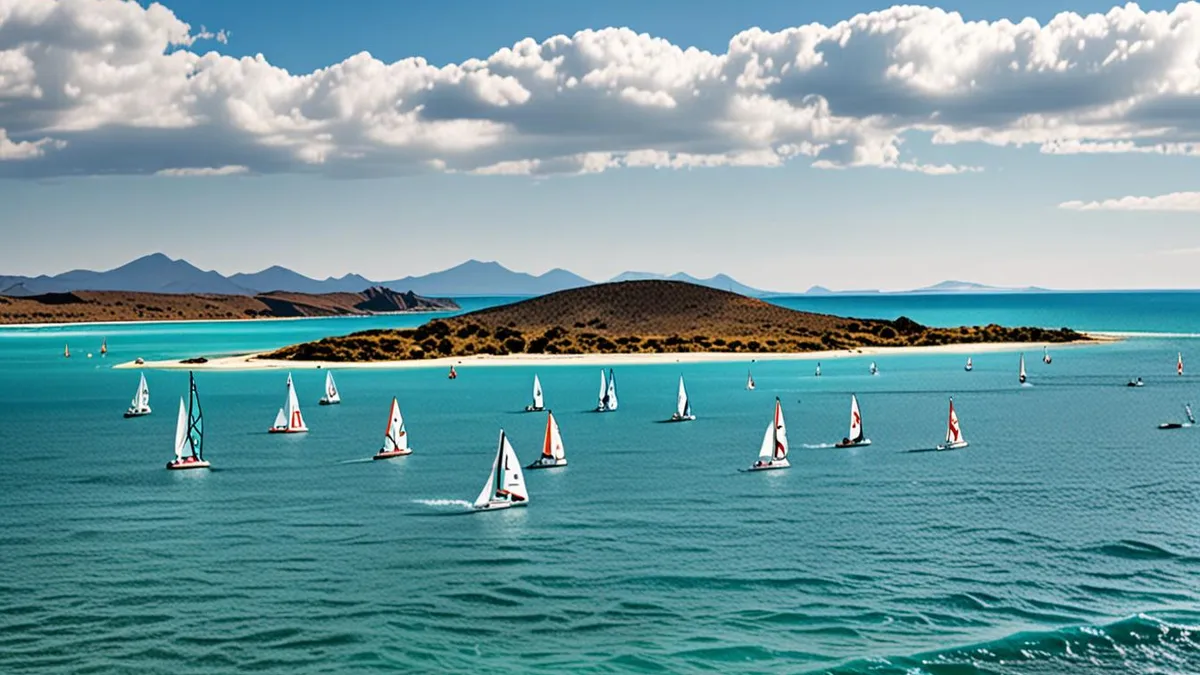
The star attraction is Sotavento beach, which stretches roughly 20 km along the southeast coast. What makes it famous among windsurfers is the way the water behaves at low tide: shallow lagoons form over the sand, creating flat-water zones that are perfect for practicing maneuvers and for freestyle sessions. Kitesurfers use the same wide expanses, and there’s plenty of room for everyone to launch without crowding.
Plan your transfer before you book
One practical point deserves attention: Jandia lies roughly 1.5 hours from the airport. That’s a real difference compared with the northern resorts, and it affects both your arrival day and any excursions you plan. When comparing prices between resorts, factor in the transfer cost and time, especially if you’re booking a taxi or private shuttle rather than a rental car. For travelers who value wide beaches, reliable wind, and room to breathe, the extra ride is usually a fair trade.
Caleta de Fuste and Costa Calma: Family-Friendly Bases
Caleta de Fuste works well for families who want a short hop from the plane to the pool. The resort sits close to Fuerteventura airport, so you can be unpacking within the hour rather than managing a long transfer with tired kids. Its sheltered, man-made bay keeps the water calm and swimmable, which makes it easy to let younger children paddle while you keep an eye on them from a nearby sunbed.
Costa Calma, further south along the same coast, offers a good spread of mid-range beachfront stays. Its big advantage is location: you are close enough to Jandia’s wind spots that a surfer or kiter in the family can head out for sessions without turning the day into a logistics exercise. The beach here is long and sandy, with plenty of room for everyone else to settle in.
Both resorts suit the same kind of trip: one person chasing wind or waves while the rest of the family stays on calm sand. If you like the idea of that split routine, you might also enjoy comparing it with Croatia’s relaxed coastal resort towns, which suit a similar mix of beach time and easy days.
- Caleta de Fuste’s man-made bay means shallow, gentle entry water, handy for toddlers and for anyone recovering from a wipeout-heavy kiting session the day before.
- Costa Calma’s beachfront mid-range hotels often include pools and kids’ facilities, so non-windy afternoons stay easy to fill without driving anywhere.
- From either base, a wind-sports family member can book morning sessions and be back for a shared lunch, since the spots around Jandia are a manageable drive rather than a full-day expedition.
- Caleta de Fuste’s proximity to the airport makes it a strong pick for shorter trips where you do not want to lose half a day to transfers.
When to Book and What Fuerteventura Resorts Cost
Fuerteventura’s high season runs from June to September, with extra spikes around the Christmas and Easter weeks. During these periods, the most popular beachfront resorts fill quickly, so booking 2-3 months ahead is the simplest way to secure better rates and your first choice of room type. Leaving it later usually means paying more or settling for a hotel further from the sand.
Shoulder Months for Value
May, October and November are the smart traveler’s months on the island. Prices drop noticeably, the crowds thin out, and conditions remain reliable, with the sea still warm enough for comfortable swimming and the wind season either starting up or winding down gently. If your trip is more about beaches than wind sports, these months deliver the best balance of cost and quality.
What You Can Expect to Pay
Nightly rates typically range from about €60 for budget apartments and guesthouses to €250 and beyond for beachfront luxury resorts with pools, spas and direct sand access. Mid-range family hotels usually fall somewhere in between, and all-inclusive options sit at the higher end of their category. Keep in mind that prices move with demand, so check current rates for your exact dates before assuming any figure still holds. Comparing a shoulder-month week against a high-season one often shows a difference large enough to fund an extra excursion or a few equipment rentals.
How to Choose Between Fuerteventura Resorts
The biggest mistake travelers make when comparing Fuerteventura resorts is treating them as interchangeable. They are not, and wind exposure is the first thing to sort out. Lagoon-side stays, like those around Corralejo’s sheltered waters, suit learners who want forgiving conditions. Open-coast resorts facing the full force of the trade winds suit advanced kiters and windsurfers who would find a lagoon boring by day two.
Transfer time is the second factor, and it matters more than most people expect. A 1.5-hour ride from the airport is a minor inconvenience on a two-week trip, but on a 4-night getaway it eats a real chunk of your holiday. Weigh the drive against how many actual beach and water days you are buying.
Finally, think about how you want to eat. Water sports days rarely follow a schedule: sessions depend on wind and tide, and you often end up eating out flexibly rather than sitting down to a fixed buffet time.
- All-inclusive works best for families with fixed meal routines, but check whether the hotel’s dinner hours clash with evening wind sessions or boat trip return times.
- Self-catering or bed-and-breakfast stays give kiters and surfers room to grab late breakfasts after early sessions and eat wherever they happen to be at midday.
- If you are renting equipment or booking lessons, look for resorts near the schools and rental centers themselves, since carrying gear across town twice a day gets old fast.
- Match your resort’s character to your group: a nightlife-heavy hub suits groups of friends, while quieter spread-out areas suit couples who want the beach to themselves.
Wrapping Up Your Fuerteventura Resort Plan
Fuerteventura answers that common question about the Canary Islands: which resort gives you both good beaches and dependable wind sports? The match is simple. Corralejo suits travelers chasing water sports energy, with its lagoons, schools and boat trips. Jandia and Morro Jable suit those who want space and wind, with Sotavento’s long stretch of sand. Caleta de Fuste and Costa Calma suit families, where one person can kite while the rest stay on calm sand.
Timing matters as much as location. Aim for April to September if steady trade winds for windsurfing and kitesurfing are your priority, or choose the shoulder months of May, October and November for lower prices and fewer crowds with still-reliable conditions. In high season, booking 2-3 months ahead helps lock in rates that typically run from about €60 per night for budget stays to €250+ for beachfront luxury. If this helped you plan your trip, leave a comment or share the article.