Booking a hotel for the family usually comes down to one decision: two connecting rooms or one family suite. The connecting rooms vs family suites question matters more than most parents expect, because the wrong pick can mean less sleep, less space and a noticeably bigger bill at checkout.
Both setups can work brilliantly, but they suit different families, different ages and different kinds of trips. In this guide, we break down what connecting rooms actually offer, what a family suite gives you that two rooms cannot, and how the two compare on price. We also cover how to book and actually guarantee the setup you want, which option fits your children’s ages, where each works best by trip type, and a quick summary to help you choose. By the end, you should know exactly which setup to request for your next family stay.
What Connecting Rooms Actually Offer Families
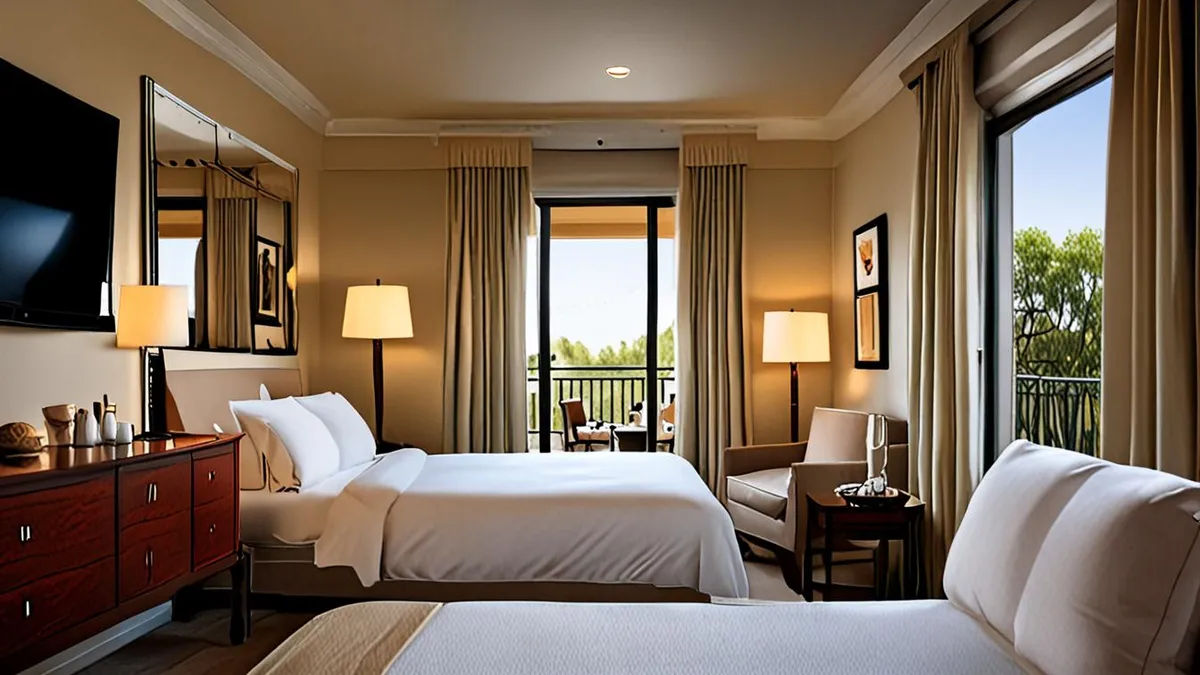
Connecting rooms are exactly what the name suggests: two separate, fully private rooms joined by an internal door. The typical setup pairs one room with a double bed for the parents with a second room holding twin beds for the kids. Everyone gets their own space, and the internal door means you move between rooms without stepping into a corridor.
The biggest advantage is privacy. Once that door closes, parents and teens each have a genuinely separate room, and in many hotels each room also comes with its own bathroom. For families with older children, that separation can be the difference between a restful trip and a week of sharing one stuffy room.
The catch: the door is a request, not a guarantee
Here is what many families discover too late. Connecting rooms are usually two standard rooms that happen to share a door, and hotels treat that door as a request rather than a guaranteed feature. If the hotel is busy or the pairing gets reassigned, you can end up with two rooms down the corridor from each other.
Some properties also have house rules about who gets the doors unlocked at all. A number of hotels only release connecting rooms to guests traveling with children under 18, so a group of adults booking two rooms may find the internal door stays locked. Always confirm the arrangement with the hotel directly rather than assuming your booking note settles it.
What a Family Suite Gives You That Two Rooms Cannot
A family suite is a single bookable unit with one big advantage two rooms can never match: a shared living space. Suites typically add roughly 15-25 sqm of common area compared with two standard rooms, and that space belongs to everyone at once. No doors to open, no corridor logic, no knocking. The kids can spread toys across the floor while you read on the sofa a few steps away.
Practical extras that change your daily routine
Many suites include a kitchenette or a sofa bed, and both earn their keep fast on a family trip. A kitchenette lets you handle breakfasts, bottles and snacks without a restaurant visit every morning, which saves money and time. A sofa bed gives younger children a nap spot in the same room where you are sitting, so you are never far away when they stir.
Suites also solve the booking risk problem entirely. A family suite commonly sleeps 4-5 guests in one confirmed unit, which means there is no chance of your rooms being split across different floors or ends of a corridor. What you book is what you get: one layout, one door, one invoice, and a living room where the whole family can gather at the end of the day.
Connecting Rooms vs Family Suites: Price Comparison
Price is where the decision gets interesting, because the intuitive assumption, “two rooms must cost more than one suite,” does not always hold. Two connecting rooms usually run 60-90% of a suite rate, which often makes them the cheaper option. But the math can flip: depending on the hotel and the season, two rooms can end up costing more than one suite, especially when the suite is on promotion.
Suites typically add 20-40% over a standard double room at the same hotel, but that premium includes the living space. You are not just paying for extra square meters; you are paying for a kitchenette, a sofa and a layout designed around families. When you weigh that against two separate rooms with no shared area, the value comparison changes.
- Count guests, not rooms. A suite that sleeps 4-5 in one unit often fits a fifth family member, such as a younger child on the sofa bed, at little or no extra charge, while a second room may be priced as a full double regardless of who sleeps in it.
- Factor in what the suite saves you. A kitchenette covers breakfasts and snacks, so compare the total trip cost, including meals, rather than the nightly rate alone.
- Check how the hotel prices children. Some properties charge per room, others per person, and kids-stay-free policies apply differently to suites than to a second room, so run the numbers for your exact family size.
The practical rule: compare the per-person cost of each option for your family, not the per-room cost. A suite that looks expensive per night can be the cheapest bed per head once you count everyone it sleeps.
How to Book and Guarantee the Setup You Want
Connecting rooms are one of the most commonly requested setups in family travel, and also one of the most commonly misunderstood. The internal door that joins the two rooms is rarely something you can assume. It is a request, and hotels treat it that way, so how you book matters as much as what you book. A little planning before you pay can save you a stressful check-in conversation with tired children in tow.
- Put the connecting door request in your booking notes. When reserving two rooms, write clearly in the special requests field that you need an internal connecting door between them. This puts the request on the record from day one rather than as an afterthought at check-in. Mention that you are traveling with children, too, since some hotels only unlock connecting doors for guests with children under 18.
- Confirm by phone or email 2-3 months ahead. A note in a booking is not a confirmation. A few months before arrival, contact the hotel directly and ask a staff member to verify that two rooms with a connecting door are assigned to your reservation. Ask them to note it in the system again, and note down the name of the person who confirms it for you.
- Book early for July-August peak family travel. Summer school holidays are when every family wants the same few connecting pairs, and inventory is limited. Hotels typically have only a handful of connecting rooms per floor, so during peak season these go first. Booking 2-3 months ahead is a sensible minimum, and earlier is even better for large families needing several rooms.
- Consider a bookable suite instead. Some hotels sell family suites as a single unit with a fixed sleeping configuration. Booking one suite removes the door-guarantee risk entirely, because there is no internal door to unlock and no second room that can be reassigned. You also keep everyone in one bookable unit, which matters if the hotel is busy.
Whichever route you take, get the confirmation in writing. An email from the hotel stating that a connecting door or a suite is reserved gives you something to point to at the front desk if the room allocation changes on arrival day. Print it or keep it on your phone, and check it again a day or two before you travel.
Which Setup Suits Your Children’s Ages
Children change what you need from a room setup far more than any hotel brochure suggests. A layout that works brilliantly with a toddler can feel cramped with two teenagers, and the reverse is true as well. Match the setup to the ages you are actually traveling with, not to the ages they will be someday.
With toddlers and young children, a family suite is usually the more practical choice. Parents stay within earshot, whether the little one sleeps on a sofa bed in the same unit or in a corner of the suite, and a kitchenette makes early breakfasts and bottle prep far easier than a mini fridge in a standard room.
Teens and tweens are a different story. They value independence, their own bathroom, and a door they can close between themselves and their parents. Connecting rooms deliver exactly that, with the reassurance that everyone is still a few steps away.
- Sofa bed proximity for naps: in a suite, a napping toddler on the sofa bed is visible from the living area, so parents can read or work without tiptoeing down a corridor.
- Separate bathrooms for teens: connecting rooms often give each room its own bathroom, which cuts morning queues when teenagers take long showers.
- Door policies for minors: at some hotels, the connecting door is only unlocked when the booking includes minors, so families with teens usually qualify, but confirm the policy when you book.
- Mixed-age combinations: if the hotel allows it, parents and a toddler can take a suite while teens stay in a connecting room next door, giving both groups what they need.
If your children span several ages, ask the hotel whether it can hold a suite and an adjacent room under one reservation. Not every property will, but family-oriented resorts are often flexible when asked early.
Where Each Setup Works Best by Trip Type
The right choice often depends less on your family and more on where you are going. A setup that works well in a city hotel can be a poor fit at a resort, and vice versa. Think about the property style and the trip length before you decide.
City breaks favour suites
City hotels are typically compact, with limited room counts and few connecting pairs on any given floor. That makes connecting rooms both scarce and unreliable in urban centers, especially at peak times. A family suite is usually easier to secure as a single bookable unit, and the extra living space of roughly 15-25 sqm gives everyone somewhere to gather after a day of sightseeing, even when the hotel itself has no lounge worth lingering in.
Resorts and longer trips
Larger resort and ski properties are a different story. They tend to have more connecting pairs, dedicated family wings, and staff who handle door requests regularly, so connecting rooms are a realistic option there. For winter trips in the mountains, look at properties with family wings when browsing ski hotels in Andorra and similar destinations, where room counts run high and connecting setups are common.
Trip length matters too. On a stay of a week or more, the suite premium pays for itself in daily comfort: space to prep snacks, dry swimwear, and let children spread out without sitting on beds. For a two-night city stop, that same premium is harder to justify, and a well-chosen connecting pair may serve you better at a lower total cost.
Choosing Between the Two at a Glance
So, which one wins? If you want guaranteed shared space, a kitchenette for breakfasts and naps, and one booking that covers everyone, a family suite is the safer pick for families of four or five. If your kids are older and you value privacy, separate bathrooms and often a lower total price, two connecting rooms usually make more sense.
The deciding factors are simple: your children’s ages, how long the trip lasts, and how far ahead you can book. Whatever you choose, confirm the exact room setup in writing before you travel, because a door request or a suite photo on a booking site is not the same as a guarantee. If this helped you decide, leave a comment or share the article with another family planning their next trip.