Many travelers book a standard room by default and only realize on arrival that the view, floor or layout was the one thing that actually mattered. You check in, open the door, and find yourself staring at a brick wall three feet from the window, or lying awake above the hotel bar. The hotel itself may be excellent — the hotel room type simply didn’t match what you needed.
This guide walks you through every decision that shapes daily comfort: whether a sea, lake, mountain or city view is worth the premium, which floor best suits your priorities, and how standard rooms, corner rooms, suites and connecting rooms differ in practice. We also cover how to dodge noisy spots near elevators and rooftop bars, when to book to get the widest choice, and how to match everything to the length and style of your trip. By the end, you’ll know exactly which hotel room type to ask for — and how to actually get it.
Why Your Hotel Room Type Matters More Than the Hotel Star Rating
Two rooms in the same hotel can differ by 15-40% in price and feel completely different in practice. One might be a bright corner room with two windows and a wide outlook; the other, a dark interior room overlooking a ventilation shaft. Same star rating, same lobby, same breakfast room — yet a completely different stay.
This is why the hotel star rating tells you less than you’d think. A 4-star hotel with a poorly chosen room type can feel worse than a 3-star hotel with the right one. The stars measure the property as a whole: the spa, the restaurant, the concierge. Your comfort, meanwhile, is decided inside roughly 20 square meters for the hours you’re actually there.
Where daily comfort really comes from
Think about what you experience minute to minute. You don’t spend your stay in the lobby amenities — you spend it looking out a window, climbing into bed, and listening to whatever is on the other side of the wall. Views, floor level and layout shape those moments far more than a marble reception desk does.
So before you compare hotels by rating, compare rooms within the hotels on your shortlist. Ask what the cheapest room type actually faces, which floor it sits on, and how it’s laid out. Those three answers predict your experience better than any star count.
Choosing a Room View: Sea, Lake, Mountain or City
A view is the most emotional — and often the most expensive — room decision you’ll make. Sea, lake and mountain views typically carry a meaningful premium over the base rate, so the first question is brutally practical: will you actually be in the room to enjoy it? If you plan full days of sightseeing and only return to sleep, you may pay extra for a view you see for ten groggy minutes each morning. Check the current surcharge with the hotel before you commit, since it varies widely by property and season.
Where you stay matters as much as how you travel. Waterfront destinations like fjords and lakes tend to justify the view premium far more than inland city stays — when the water and mountains are the whole reason for the trip, waking up to them is worth paying for. Places built around their scenery, such as Norway fjord hotels with scenic waterfront stays, make the upgraded room almost part of the experience itself.
City-view rooms, by contrast, are often the best value when your days are packed. A skyline at night is pleasant, but it rarely competes with a fjord or an alpine lake. Spend the difference on a better location or a longer stay instead.
- Partial views sit in the middle on price: cheaper than a full view, but check which direction the window faces before paying. A “partial sea view” angled toward a parking lot delivers neither the savings’ satisfaction nor the scenery.
- Ask for a floor plan or recent guest photos before booking a view category. Hotel websites often show the best angle from the best room, not what your specific room will see.
- Consider the season and sun direction. A west-facing window matters if you want sunset light; an east-facing one if you’re an early riser who likes morning sun with coffee.
- Match the view to the trip’s purpose. On a honeymoon or a scenic retreat, the view is the entertainment; on a business or city-break trip, it’s a nice-to-have you can safely skip.
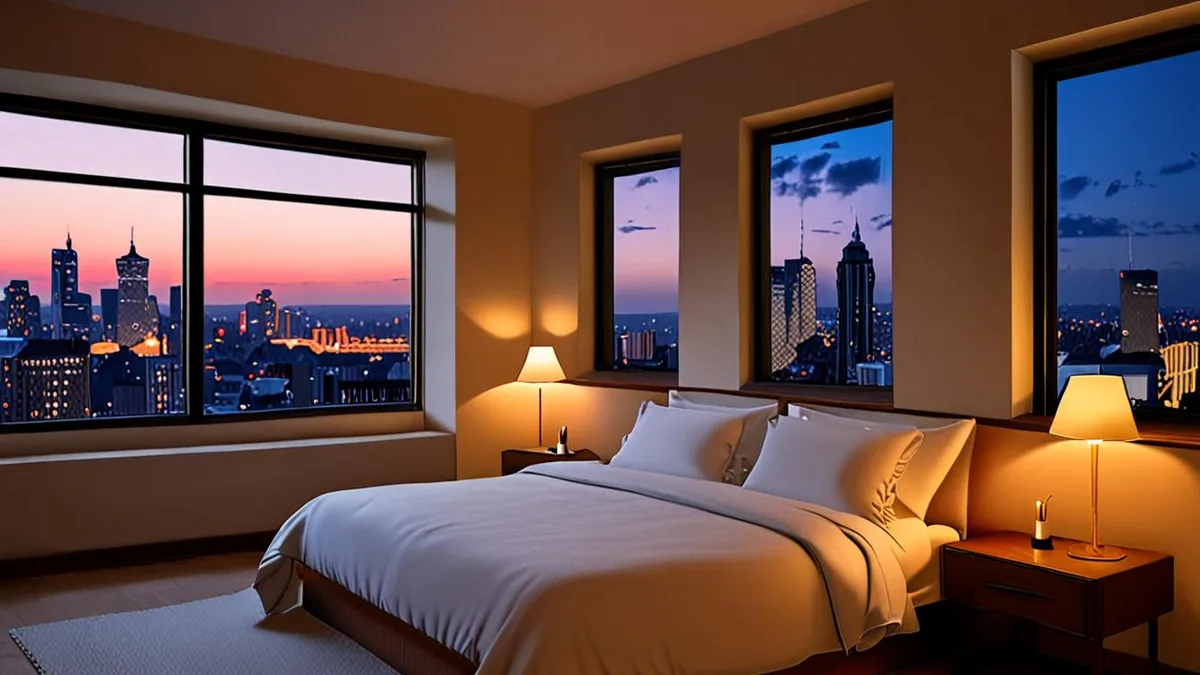
Which Floor Is Best: High, Low or Top Floor Rooms
Floor level changes your stay in ways most people only notice after a bad night’s sleep. Floors 4 and up cut street noise dramatically — no more delivery trucks, bar chatter or scooters at midnight — but in view-oriented hotels that quiet can add 10-30% to the nightly rate. You’re paying for elevation, and elevation is priced like a view.
At the very top, top-floor rooms usually get the best outlooks of all, but check the building’s age: older buildings may lack elevator access to the top floor, which means hauling luggage up several flights. At the opposite end, ground-floor rooms suit travelers with heavy luggage or mobility concerns, since you can walk straight in from the street — but you trade away privacy and quiet, often with passersby at window level and the most foot traffic outside your door.
For most city hotels, the sweet spot is a mid-level floor on floors 2-3, which balances noise, elevator access and price. You’re above street level, a short elevator ride from the lobby, and typically below the premium charged for high floors.
- Mountain and scenic resorts work differently from cities. In places built around the outlook — think High Tatras hotels with mountain views — the highest available floor often justifies its price because the view improves with every level.
- Check what’s directly above your floor. A room on the floor beneath a rooftop bar or terrace can be louder than a street-facing room several levels down.
- Ask about elevator wait times at peak hours. In very tall hotels, a high floor can mean several minutes in the lobby each morning during breakfast rush — a real cost if you have early tours.
- Ground floors near pools or gardens can work well in resort settings, where “outdoor access” is a feature rather than a privacy problem. Judge the floor by its surroundings, not just its number.
Room Layouts Explained: Standard, Corner, Suite and Connecting Rooms
Most travelers book the cheapest room category without thinking twice, and for short stays that is often the right call. But layout affects your daily routine more than you might expect, especially once a trip stretches beyond a few nights.
The basic rule of thumb is simple: standard rooms work well for 1-3 night city trips, when you mostly need a comfortable bed and a decent shower. Suite-style layouts pay off for stays of 4+ nights, when extra space for unpacking, working or relaxing in the evening starts to matter. Paying for a suite on a two-night trip rarely makes sense, while squeezing a week into a compact standard room often does.
Here are the main layout types and what to know about each:
- Standard room: usually one combined sleeping and living area with a single window; check whether the bathroom has a tub or shower only if that matters to you.
- Corner room: offers two windows and more floor space, but typically costs 10-20% more; the extra light and cross-view can be worth it on longer stays.
- Suite: separates sleeping and living areas, so one person can rest while another works or watches TV; useful for business trips mixed with leisure.
- Connecting rooms: ideal for families, but always confirm the connecting door exists — adjacent rooms are not the same thing, and some hotels only guarantee the door on request.
- Split-level or duplex layout: adds character and separates sleeping from living space vertically, but stairs inside the room can be awkward or unsafe with small children.
If you are unsure, email the hotel and ask for the exact square footage and window count of the category you are considering. A short reply can tell you more than the booking description ever will.
How to Avoid Noisy Rooms: Location Within the Hotel
Two rooms in the same hotel, at the same price, can differ dramatically in how well you sleep — and it usually comes down to where the room sits within the building. Location within the hotel is one of the most overlooked parts of choosing a room type.
The biggest culprits are the mechanical and service areas. Ice machines hum around the clock, elevator doors chime, and housekeeping carts rattle in and out of service closets from early morning. As a practical rule, request a room at least 3 rooms away from elevators, ice machines and service closets. It sounds fussy, but it is the single most effective noise request you can make.
Look up, then look down
Rooms above restaurants, bars or rooftop terraces carry noise late into the evening, often well past midnight. Check the hotel’s own website and recent guest reviews to find out what sits directly above the room block you are considering. Music through the floor is hard to escape once you have checked in.
Lower floors near the main entrance absorb street noise: deliveries, taxis and late arrivals all funnel past these rooms. This is where floor choice and view choice overlap — a ground-floor “garden view” may actually mean a view of the parking lot and the highway. Pair your floor decision with the view section of this article so you are not trading one problem for another.
If the hotel sits on a busy road, ask for a room facing an inner courtyard. Courtyard rooms are quieter in most city hotels, and many front desks will assign one at no extra cost if you simply ask before arrival.
When and How to Book Your Preferred Room Type
Getting the room you actually booked is a skill of its own. Hotels allocate rooms dynamically, and the travelers who end up with the quiet corner room on a high floor are usually the ones who planned ahead, asked clearly and stayed polite but persistent. Here is how to improve your odds without paying for an upgrade you might have gotten for free.
- Book 2-3 months ahead. This is when the widest choice of room types is still available. Last-minute bookings often leave you with only standard rooms, no matter how many categories the hotel lists on its website. Early planning also gives staff time to note your preferences.
- Add a special request in the booking notes. Spell out exactly what you want — a high floor, a quiet side, a particular view — and keep it brief. Vague requests like “a nice room if possible” give the front desk nothing to act on.
- Reconfirm by email 1-2 weeks before arrival. Written requests are far easier for staff to track than a phone call made months earlier. A short, friendly email also puts your request back on the radar right before rooms are assigned.
- Call the hotel directly on arrival day. Front desks often release unallocated preferred rooms for free or a small fee, because they would rather have the room occupied than leave it empty for the night. Ask politely what is available rather than demanding an upgrade.
- Consider booking direct. Many hotels open more room-type options to direct bookers, since third-party agencies often sell only a subset of categories. Check both channels before you commit.
None of these steps guarantees an upgrade, but together they put you at the front of the queue when a good room becomes available. Ten minutes of planning and one polite email are usually all it takes to move from a standard room facing the parking lot to the one you actually wanted.
Finding the Right Room Type for Your Trip
Many of us default to the cheapest room category without thinking twice, then realize on arrival that the view, floor or layout was the one thing that actually shaped the stay. The fix is simple: match the room type to your trip before you pay. If you spend your days out sightseeing, a city-view room on a mid-level floor often beats a pricey sea view you will barely see. If you are staying four nights or longer, a suite-style layout pays off; for a one to three night city trip, a standard room is usually enough.
Keep the basic trades in mind: views and floors cost extra, while layouts trade against trip length. Booking two to three months ahead and stating your preferences clearly in the booking notes is what gets you the room you actually wanted, not the one left over. If this helped you plan a stay, leave a comment or share the article with a fellow traveler.