Finding the right beach hotel in Greece for a family trip sounds simple until you actually start looking. One hotel has a great kids’ pool but sits on a rocky shelf; another is right on a beautiful sandy bay but doubles as a nightlife hotspot. And then there’s the budget, which somehow has to survive a week of meals, sunbeds and ice cream in peak summer. Many parents end up compromising on something that matters, usually water quality, space or cost.
This guide breaks the decision into manageable pieces. We’ll look at why your choice of base matters so much, which Greek regions suit which type of family, and how timing your stay affects both crowds and price. Then we’ll get practical: room layouts that actually fit everyone, the facilities checklist worth checking before you book, and how to read reviews the way a family traveler should. By the end, you’ll know exactly what to verify before committing to a hotel.
Why the Right Beach Hotel in Greece Makes or Breaks a Family Trip
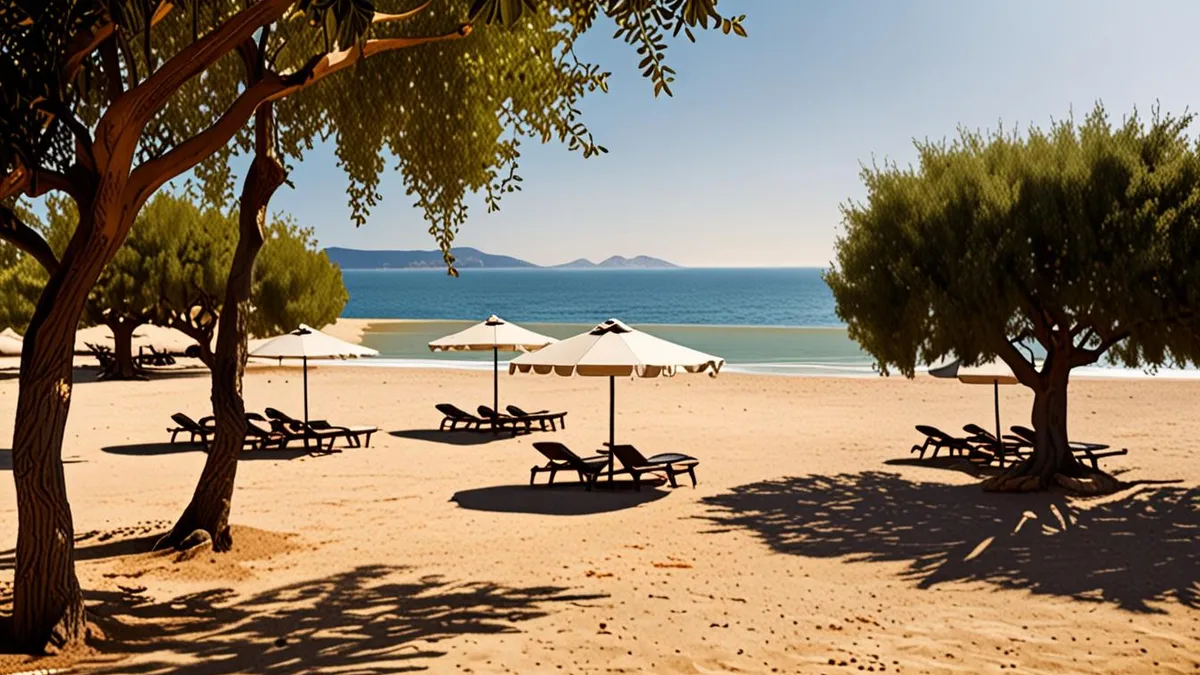
The single biggest quality-of-life upgrade on a Greek family holiday is stepping out of your hotel and onto a shallow, sandy beach. When the water shelves gently and the sand is soft, toddlers can paddle at the edge while you keep everything in sight. No car rides, no hauling coolers and umbrellas across a parking lot, no twenty-minute march with floaties and bags. Logistics disappear, and your day becomes about swimming and naps instead of transport.
A great beach alone isn’t enough, though. Greek summer days can be fiercely hot, and the meltemi wind can whip up waves and sand on some coasts. That’s where on-site facilities earn their keep. A shaded pool, an indoor corner for young kids, a playground or a kids’ club gives you a plan B for the windiest and hottest hours, without packing everyone into the car.
What goes wrong with the wrong base
Choose a hotel in or near a known party resort area and you may find the calm, family-friendly water is a drive away. Suddenly every beach day becomes a car trip with gear, snacks and tired children, and evenings come with noise you didn’t bargain for. The fix is simple: before booking, check what the water in front of the hotel is actually like, and what the surrounding area is known for. A calm bay and a quiet stretch of coast are worth more than an extra star on a listing.
Pick the Right Region: Which Greek Coast Suits Your Family
Greece is not one beach destination but many, and the right region depends heavily on your children’s ages and what you want beyond the sand. The broad split is between the big sandy southern islands, the greener west, and the Cyclades with their village charm. All three can work brilliantly for families, but they deliver very different holidays.
If your priority is long, sandy beaches where little ones can wade safely, Crete and Rhodes are the classic choices. Both have stretches of coast with shallow, gradual entries that make toddler swimming far less stressful. Corfu and the Peloponnese trade some of that scale for greener scenery, olive groves and quieter resort stretches, which suits families who like nature walks between beach days. The Cyclades, especially islands like Naxos and Paros, combine good family beaches with walkable villages where kids can wander for ice cream while you finish your coffee.
- Crete: The largest island, so you can pair beach days with attractions like aquariums, water parks and the palace of Knossos, useful for rest days and older kids.
- Rhodes: Compact and well-developed, with a medieval old town in Rhodes town that makes an easy, shaded half-day outing away from the sand.
- Corfu: The greenest of the major islands, with a lush interior and easy day trips, good for families who want variety beyond the beach.
- Peloponnese: Quiet coastal stretches plus inland sights like ancient sites, ideal if you want a road-trip element to the holiday.
- Naxos and Paros: Village squares, evening strolls and tavernas where children are welcome, so nights out don’t require a car or a babysitter.
One region to treat with caution if you’re traveling with young children: the famous nightlife hubs. Some resorts on Crete, Rhodes and Ios are known for bars and clubs rather than calm bays. A hotel there might look affordable and well-rated, but the beach in front of it may be busy, and the calm water you actually want could be far away. Check what the specific town or stretch of coast is known for, not just the island’s overall reputation.
Timing Your Stay: Season and Booking Lead Time
Timing shapes almost everything about a Greek family beach holiday: the price of the room, the crowd on the sand and even how pleasant the sea feels. July and August are peak season, when family rooms often cost 30-50% more than in June or September, and beaches and pools are at their fullest. If your school schedule allows any flexibility, shifting your trip even a few weeks can transform both the budget and the experience.
Why June and September work so well
In June and September you get warm sea without the peak-season squeeze. The water is generally comfortable for swimming by early June on most family-favorite coasts, and September often brings the warmest sea of the season along with noticeably thinner crowds. Prices sit well below the July-August peaks, which means the same family room budget stretches further, or a higher-end resort suddenly becomes affordable. Restaurants are calmer too, so evenings with young children feel less like an obstacle course.
May and October are the budget play. The sea can be too cool for long swims, especially early in the season, so these months suit families with flexible schedules who prioritize price and quiet over time in the water. If your trip is more about exploring villages and sights with some beach time on the side, they can be a great fit.
When to book
Family rooms are the scarcest inventory in any Greek hotel, since most properties have only a handful. Booking 3-6 months ahead is typical for summer stays, and if you need August on a popular island, book earlier still. Once the two or three family rooms in a good beachfront hotel are gone, your only options are connecting rooms at a higher price or a hotel further from the water. Set a reminder, check cancellation terms, and lock in the room type you actually need rather than hoping an upgrade appears later.
Room Types and Layouts That Fit the Whole Family
Room descriptions can be misleading, so treat the phrase “family room” as a starting point rather than a guarantee. In Greece, standard family rooms usually sleep three to four people, but the exact bed configuration varies widely: some have a double bed plus two singles, others add a fold-out sofa, and a few simply push a cot into a double room. Before booking, email or call the hotel and ask precisely how many proper beds the room has and whether the extra beds are real beds or sofa beds.
If you are a family of five or more, resist the temptation to squeeze everyone into one room. Most Greek family rooms max out at four guests, and crowding in means poor sleep, no privacy and often a breach of the hotel’s fire capacity rules. Instead, look for connecting rooms or a proper two-bedroom suite. Connecting rooms let parents keep a door open at night while still having their own space, which makes a two-week stay far more pleasant.
Once capacity is sorted, focus on the small features that matter most with children:
- A fridge in the room keeps milk, fruit, yogurt and water cold, which saves daily trips to the bar or shop and helps with babies and toddlers.
- A balcony with safe railings gives parents somewhere to sit in the evening after the children fall asleep, without leaving the room.
- Blackout shutters are common in Greek hotels and genuinely help young children nap and sleep through long summer evenings, when the sun sets late.
- A bathroom with a proper bathtub makes bathing small children much easier than a walk-in shower, so ask about this if you have babies or toddlers.
- Storage space for beach gear, wet swimsuits and strollers keeps the room livable over a week or more.
Confirm these details in writing before you pay the deposit. A short email now prevents a disappointing arrival later.
Facilities Checklist: Pools, Kids’ Clubs and Beach Access
Facilities can make or break the days between beach trips, so look beyond the brochure photos. A single main pool is not enough for a family: you want a separate children’s pool with a shallow, sloped entry where toddlers can splash safely away from swimmers. Shaded play areas matter too, because midday Greek sun is intense and children need somewhere cool to play between the morning beach session and late afternoon.
Kids’ clubs are a major selling point, but read the fine print. Check the supervised age ranges, since some clubs accept children only from age four, and confirm which months the club actually operates. Many Greek resorts run their kids’ clubs and full activity programs only during the July-August peak, so a June or September stay may mean the club is closed or running with limited hours. Ask the hotel directly rather than relying on third-party listings.
Beach access is the other half of the equation. A walk of 200-500 meters from hotel to beach is a comfortable benchmark for families carrying bags, toys and small children. Just as important, verify the beach itself: confirm it is sandy rather than pebbly, and gently sloping into shallow water. Greek beaches vary enormously, and a stunning rocky cove is far less useful with a toddler than a plain, shallow sandy stretch.
Budget-wise, all-inclusive family resorts in Greece typically run about €150-€350 per night in high season. That range varies a lot by island and standard, so compare the total against a half-board option before assuming all-inclusive is better value.
- Check whether sunbeds and umbrellas at the pool and beach are free for guests, as some hotels charge separately or reserve the best spots.
- Ask if towels for the pool and beach are provided, since packing your own for a family adds bulk to the luggage.
- Look for family-friendly extras like playgrounds, table tennis or evening entertainment, which fill the hours between dinner and bedtime.
- Confirm lifeguard coverage or pool supervision hours if your children are not strong swimmers.
Budgeting and Reading Reviews Like a Family Traveler
Reviews written by other families are the most honest source of information you will find, but you need to filter them well. On booking platforms and review sites, search reviews for keywords like “family room”, “kids’ pool” and “shallow water”. This pulls up the experiences that actually match your trip, rather than honeymooners complaining about noise from the children’s pool. Pay attention to recent reviews from families with children of similar ages to yours, since a hotel that delights a family with teenagers may frustrate one with a toddler.
Compare the true total cost
Sticker prices can be deceptive, so compare total costs including meals before choosing a board basis. All-inclusive rates at Greek family resorts often look reasonable at first glance, until you realize they lock you into hotel food every evening. On islands with good tavernas within walking distance, half-board can easily beat all-inclusive: you eat breakfast and dinner flexibly, enjoy fresh local food, and often spend less overall. Work out what your family realistically spends on lunches, drinks and snacks, then run the numbers both ways. Note that all-inclusive packages usually include soft drinks and ice cream for kids, which can shift the math if your children are constant snackers.
Watch for hidden extras
Lower-priced Greek hotels sometimes quote an attractive nightly rate and recover the difference through add-ons. Air conditioning is the classic example: in some budget and mid-range properties it is charged per day or per night as an optional extra, which is painful in a Greek summer. Beach lounger and umbrella fees are another common surprise, even at hotels with their own beach section. Also check whether a local tourist tax or eco fee is added at check-in, and whether cots, high chairs or airport transfers cost extra. Read the fine print, add up the likely extras, and you will know the real price of each option before you commit.
Wrapping Up Your Greek Family Beach Hotel Choice
Finding a Greek beach hotel that keeps the kids happy, offers calm water for swimming and doesn’t blow the budget comes down to a handful of smart choices rather than luck. Match the region to your children’s ages and the beach type you prefer, and aim for June or September if you want warm seas with fewer crowds and lower prices than the July and August peak.
Before you commit, verify the details that matter most: exact room capacity, a proper children’s pool and kids’ facilities that actually run during your travel dates. Then book your family room three to six months ahead of summer, since the best options for families go first. Do that, and you’ll have a base where everyone can relax. If this helped you plan your trip, leave a comment or share the article with other traveling families.