Planning a villa holiday in Greece usually comes down to one big question: should you base yourself near Athens in Attica, or fly on to Crete? It’s a genuinely tricky choice, and the Attica vs Crete villas debate matters more than most travelers expect. Pick the wrong region and you can end up with long drives when you wanted lazy beach days, or a lovely pool and no ancient sites within reach.
This guide walks through the core differences between the two regions, what villa life actually looks like on the Athenian Riviera and in Crete’s best-known areas, what each charges in peak season, and how getting there and getting around compares. We’ll finish by matching each region to the kind of trip it suits best, whether you’re traveling with kids, as a couple, or mixing city sightseeing with time by the sea. By the end, the right choice should be obvious for your dates and travel style.
Attica vs Crete Villas: The Core Differences at a Glance
The fundamental difference comes down to transfer time and trip structure. Attica is all about convenience: land at Athens airport and you can be at a villa on the Athenian Riviera in roughly 30-60 minutes. That makes it ideal for short stays of three or four nights, or for travelers who want a soft landing after a long-haul flight without another airport connection.
Crete is a different animal entirely. You’ll take a domestic flight of about 50-60 minutes, then face another 2-4 hours of driving between villa regions on an island roughly 260 km long. That sounds like a hassle, but it’s also why Crete works as a destination in itself rather than an add-on.
Which style of trip suits which region?
Attica suits city-plus-beach trips: mornings at the Acropolis, afternoons by your pool, dinner at a seaside taverna. Crete suits self-contained island holidays, where beaches, gorges and ancient sites all sit on one island and you rarely need to leave. Ask yourself how much moving around you enjoy, and the answer usually becomes clear.
Villa Life in Attica: The Athenian Riviera and Beyond
Attica’s coastline, often called the Athenian Riviera, runs south from Athens along the Saronic Gulf. The most sought-after villa areas are the coastal suburbs of Vouliagmeni, Glyfada and the Cape Sounio area. Villas here typically come with sea views or easy beach access, and you’re never far from marinas, beach clubs and some of the best seafood on the mainland.
Inland alternatives worth considering
If your budget is tighter or you crave quiet, look inland toward Marathon and Rafina. These areas trade beach proximity for lower prices and genuine countryside calm, with pine hills, olive groves and a slower pace. Rafina’s port also makes a handy base if you plan a day trip to the nearby islands by ferry.
The big advantage of any Attica villa, though, is Athens itself. From a coastal villa, the Acropolis and the city’s major museums are typically a 30-45 minute drive away. That means you can spend a morning among the ancient sites and still be back at your pool by lunch, something no island villa can offer. For many travelers, that combination of city culture and seaside relaxation in one base is exactly what makes Attica the smarter pick.
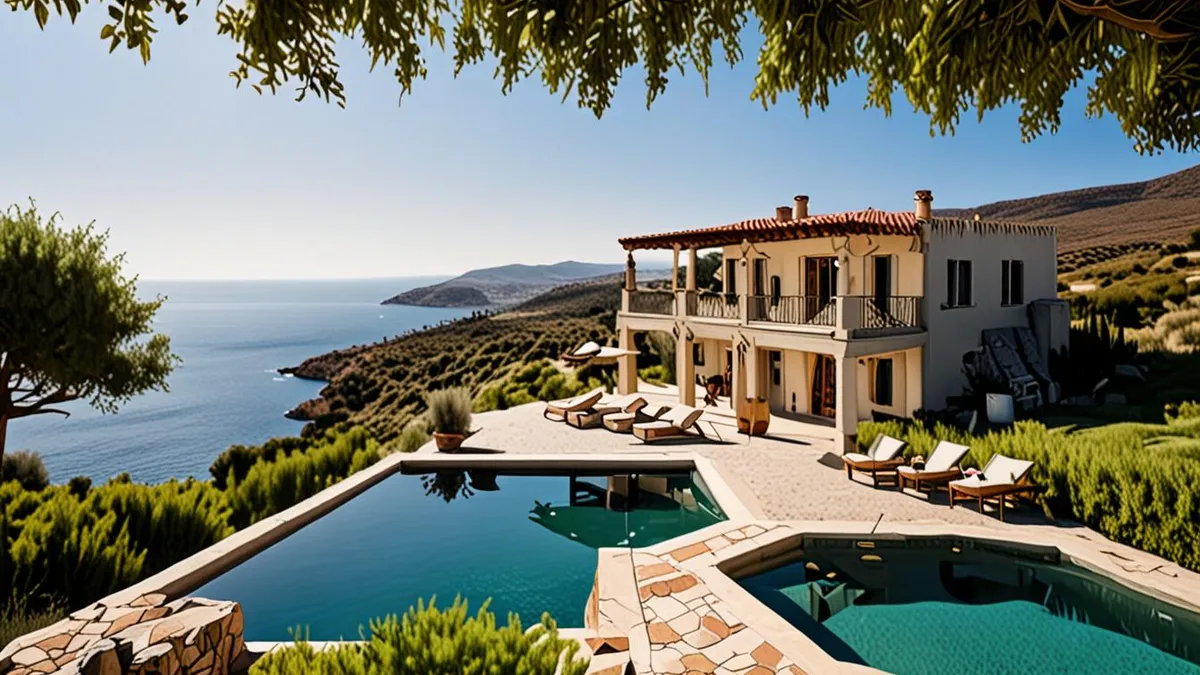
Villa Life in Crete: Chania, Rethymno and Elounda
Crete is a big island, about 260 km long, and its villa regions each have a distinct character. Choosing the right one matters as much as choosing Crete itself.
Chania and the west
Chania in the west is the island’s most atmospheric region, pairing Venetian harbor towns with some of Crete’s best beaches. It’s also the gateway to the Samaria Gorge region, so hikers and scenery-lovers gravitate here. Villas sit among olive groves and hillside villages, often with dramatic views toward the White Mountains.
Rethymno: the balanced middle
Rethymno sits roughly midway between the island’s two airports, which makes transfers less punishing than the far west. You get long sandy beaches, a charming old town beneath a hilltop fortress, and generally lower villa prices than the Chania area. It’s a good compromise for travelers who want a bit of everything without long drives.
Elounda and the east
Elounda and nearby Agios Nikolaos in the east are Crete’s luxury villa heartland. The calm, deep-blue waters of Mirabello Bay are sheltered and swimmable, and the area has long attracted travelers seeking privacy and high-end service. If a designer villa with a private pool and sea views is the goal, this is where to look first.
Costs and Seasons: What Each Region Charges
Villa prices in Greece vary more by season and location than most travelers expect. On the Attica coast, a peak-season week typically runs roughly €2,000-6,000, while Crete’s luxury villa market stretches from about €3,000 to well over €10,000 per week at the top end. The difference comes down to scale: Crete’s flagship properties in areas like Elounda compete with resort-standard service, private chefs and dramatic waterfront settings, which pushes rates higher than most of the Athenian Riviera.
Timing your booking matters as much as choosing the region. Greek villa high season runs from late June to early September, and the best properties in both regions are often gone long before summer arrives. If your dates fall in the shoulder months of May-June or September-October, you can usually book much later and still have good choice.
Shoulder season also cuts rates noticeably in both regions, and Crete has an extra advantage: its sea stays comfortably swimmable until late October, so a discounted autumn villa still delivers full beach days. For context on how Mediterranean villa pricing compares elsewhere, it helps to read about what villa rentals cost in Croatia, since Adriatic rates follow a similar seasonal pattern.
- Attica’s lower top-end ceiling means a €5,000-6,000 budget can reach into the upper tier of Riviera villas, while on Crete the same budget sits in the middle of the luxury range.
- Shoulder-season discounts in both regions are often steep enough that a May or October week costs a fraction of the same villa in August, making longer stays affordable.
- Crete’s late-October swimmable sea effectively extends its value season by several weeks compared with many Aegean destinations, so discounted rates rarely mean cold water.
- Booking 4-6 months ahead for late June-early September is especially important for large-group villas, since properties sleeping eight or more are scarcer in both regions.
Getting There and Getting Around
Getting to your villa is where the two regions diverge most sharply, and it should shape your decision before you even look at photos. Attica is essentially a one-airport destination with short road transfers, while Crete requires an extra flight or a long ferry crossing before your holiday properly begins. That first-day difference matters more than most travelers expect, especially if you are working with a week or less.
- Land at Athens airport. This is the single gateway for Attica villa stays, with direct international connections from most major European cities, so most travelers arrive without any domestic leg at all. A taxi, pre-booked transfer or rental car along the coast puts you at your villa the same morning or afternoon.
- For Crete, connect through Athens. The flight to Heraklion or Chania takes about 50-60 minutes, with frequent daily departures, so same-day villa arrivals are realistic if you book a sensible connection and leave a comfortable buffer between flights.
- Alternatively, sail from Piraeus. The ferry crossing to Crete runs 6-9 hours, which works for travelers who enjoy the journey or are bringing a vehicle, but it consumes most of a day, so factor that into your arrival plans.
- Plan your Crete driving carefully. The island stretches about 260 km, and villa regions like Chania, Rethymno and Elounda sit 2-4 hours apart by car, so a rental car is essential rather than optional.
Attica, by contrast, works perfectly well with occasional day trips and pre-arranged transfers, since everything you need sits within a short drive of your villa. On Crete, treat the car as a daily necessity: fuel up before long stretches, allow generous driving times between sights, and choose your villa region based on which part of the island you actually plan to explore. Check current ferry schedules and flight times with your operator, as frequencies vary by season.
Which Region Fits Your Trip: Families, Couples and City Breakers
The right region depends less on budget than on what kind of days you want. Attica is built for trips that revolve around one easy base, while Crete rewards travelers who commit a full week to island life. Matching the region to your travel style is the single best way to avoid paying for a villa that doesn’t suit how you actually travel. Think honestly about how much time you’ll spend at the villa itself versus out exploring, because that balance should drive the choice more than any photo gallery or rate sheet.
Families usually fit Attica’s Riviera best. One base, beaches and private pools within a short drive, and no long transfers with tired children in the back seat. Couples chasing scenery, privacy and a genuine week-long island immersion tend to get more from Crete’s Chania or Elounda villas, where the landscape changes dramatically every hour you drive. Travelers who want culture woven into a beach stay should lean toward Attica, since the Acropolis and Athens’ museums sit within about 30-45 minutes of the coastal villas, making an evening in Plaka followed by a morning swim entirely realistic.
- Families with younger children often value that Attica villas sit close to organized beaches and shallow, calm coves, cutting down the daily logistics of sand, snacks and naps.
- Couples celebrating something special frequently choose Elounda for its calm Mirabello Bay waters and the sense of seclusion that larger, more developed stretches of coastline can’t match.
- City breakers who want evenings in Athens, dinner in Plaka and a swim the next morning find the Riviera’s short round trip far easier than any island arrangement.
- Mixed-generation groups appreciate Crete’s variety, since one week can cover beaches, a gorge walk and an ancient site without ever changing hotels.
- If you’re comparing family-friendly villa destinations more broadly, see how family villas in Albania work for easy trips, as that coast shares Attica’s short-transfer appeal.
The Bottom Line: Attica or Crete
Still torn? Think of it this way: Attica wins on convenience, with short transfers from Athens airport, easy access to the Acropolis and museums, and lower peak-season prices than most of Crete. Crete wins on immersion, offering bigger scenery, a long island to explore from west to east, and a swimmable sea that lasts until late October.
The real answer is to match the region to your trip length and travel style rather than to price alone. A short break that mixes city and coast points to Attica, while a full week of island living points to Crete. Get that match right, and either choice delivers a memorable Greek villa holiday. If this helped you decide, leave a comment or share the article with your travel companions.