You want to wake up within sight of the Acropolis, but each neighborhood around it offers a very different experience and price level. Athens hotels near the Acropolis range from rooms tucked into neoclassical lanes right below the rock to quiet residential stays a short metro ride away, and the difference shows up in both atmosphere and your nightly rate.
This guide walks you through the main areas one by one: Plaka for staying right under the Acropolis, Koukaki for a local feel near the Acropolis Museum, Monastiraki and Psyrri for nightlife and rooftop views, and Syntagma and Kolonaki for comfort a short ride away. You will also find advice on when to book, a quick comparison to help you choose your area, and a final wrap-up of the trade-offs. By the end, you should know exactly which neighborhood matches your trip style and budget.
Plaka: Staying Right Under the Acropolis
Plaka sits directly below the Acropolis, and that is its whole appeal. The neighborhood is a maze of neoclassical houses, narrow lanes and car-free stretches that climb the slopes of the hill, so you step out of your hotel and are already inside the most photogenic part of Athens. From many Plaka hotels, the walk to the Acropolis entrance takes roughly 5-10 minutes, the shortest of any area in this guide.
The trade-offs of staying in Plaka
That convenience comes at a cost. Plaka is the most atmospheric area around the Acropolis, but also the most touristy: tavernas with picture menus, souvenir shops and tour groups fill the main lanes, especially from late morning onward. Rooms tend to be small, since many hotels occupy converted townhouses, and the lanes that look charming by day can stay lively well into the evening.
Prices reflect the location. In shoulder season, expect doubles from €120-180, noticeably more than you would pay a couple of neighborhoods away for similar room quality.
Plaka is best suited to first-time visitors who prioritize location over space and quiet. If your dream is to be among the first in line at the Acropolis and wander back through lantern-lit lanes after dinner, this is your area. If you need a large room, a silent night or a more local feel, keep reading.
Koukaki: Local Feel Near the Acropolis Museum
Koukaki lies just south of the Acropolis Museum, and it feels like a different city from Plaka. This is a residential neighborhood of apartment blocks, leafy streets and corner bakeries, where locals go about their day rather than catering to tour groups. The walk to the main Acropolis entrance takes about 10-15 minutes, and you pass the Acropolis Museum on the way, which makes it easy to combine a hotel stay here with a morning at the site and an afternoon in the museum’s air conditioning.
A neighborhood base, not a tourist bubble
The cafes and tavernas in Koukaki are aimed at locals rather than visitors, so you eat well and pay less than in the streets directly under the rock. Streets around the museum side have filled in recent years with small coffee spots and casual restaurants, but the area keeps a lived-in feel even in high season.
Value is the other big draw. Shoulder-season doubles here typically run from €90-140, so you often get a newer or larger room than a Plaka hotel offers at the same price.
Koukaki is a good pick for travelers who want a neighborhood base with easy metro access. The metro puts you within reach of the rest of central Athens in minutes, and you trade a slightly longer walk to the Acropolis for quieter evenings and better prices.
Monastiraki and Psyrri: Nightlife and Rooftop Views
Monastiraki and Psyrri sit on the flat ground between Plaka and the markets, and they are the liveliest areas in this guide. Monastiraki square buzzes day and night, the adjoining flea market streets fill with stalls and souvenir hunters, and Psyrri’s lanes hold tavernas, bars and mezze spots that stay busy past midnight. From either neighborhood, you can reach the Acropolis entrance on foot in roughly 15-20 minutes, usually via Monastiraki square and past the Ancient Agora area.
Rooftop views with a catch
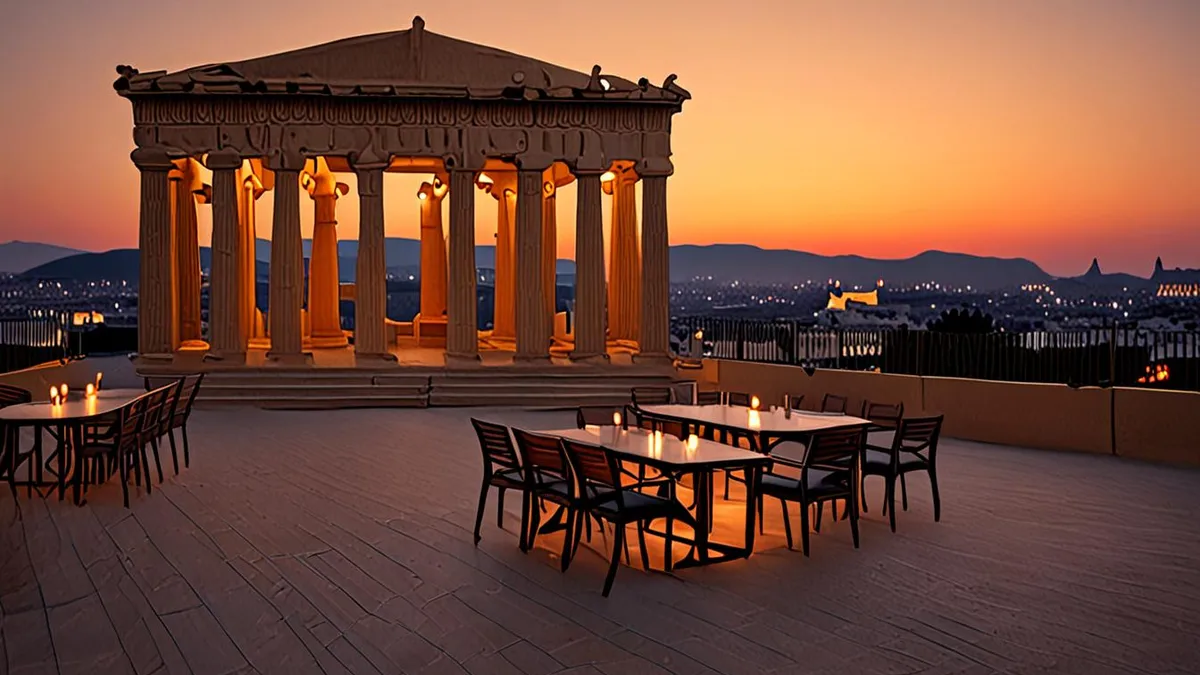
The signature experience here is the rooftop bar. Several hotels and bars in both neighborhoods have terraces with direct Acropolis views, and watching the floodlit rock from a rooftop at dusk is hard to beat. Those views come at a price: doubles start from €100-160 in shoulder season, but rooftop-view rooms rise sharply in summer, when demand for a bed with a Parthenon outlook peaks.
Noise is the trade-off. Squares stay loud late, bars spill onto the streets, and weekend nights are the busiest of all. Book a rear-facing or higher-floor room to escape the worst of it, and check reviews specifically for noise comments before you commit.
This area suits travelers who want their evenings as full as their days: street food, live music and rooftop drinks within a short walk, with the Acropolis still reachable on foot in under half an hour.
Syntagma and Kolonaki: Comfort a Short Ride Away
If you prefer a polished base with a bit of distance from the tourist crowds, Syntagma and Kolonaki are worth a serious look. Both sit northeast of the Acropolis, roughly a 20-30 minute walk from the entrance, or just 2-3 metro stops if you would rather ride. The trade-off in walk time buys you upscale hotels, better bedding, quieter streets and some of the best shopping in the city center.
Kolonaki, which climbs the slopes of Mount Lycabettus, is the pick for luxury seekers and anyone who enjoys quiet evenings. The streets here are lined with designer boutiques, galleries and refined cafes, and the hotel stock leans toward elegant, smaller properties. Doubles typically start from €140-250, so you pay more than in the neighborhoods closer to the ruins, but you also get more space and a calmer night’s sleep.
Syntagma: the practical choice for day trippers
Syntagma works well if your itinerary goes beyond Athens. The city’s main transport hub is literally at your door: the metro, tram and a wide network of buses all converge on Syntagma Square, making it easy to reach the airport, the coast or connections for day trips. From here, you can be at the Acropolis in minutes on the metro, and you will find plenty of well-known hotel chains within a short stroll of the square.
Choose Kolonaki if comfort and quiet top your list, and Syntagma if you want convenience and easy onward travel. Both reward you with a more residential, polished side of Athens that many visitors never see.
When to Book Athens Hotels Near the Acropolis
Timing your booking matters as much as choosing the right neighborhood. Hotel rates near the Acropolis swing sharply with the seasons, and the best rooms at the best prices tend to disappear first. As a rule of thumb, reserve 2-3 months ahead for the shoulder months of April-May or September-October, when the weather is milder and the city feels calmer. If you are traveling in June-August, stretch that window to 4-6 months ahead, because summer demand near the site is intense and family rooms and view-facing doubles go first.
The savings can be significant. Peak-season doubles near the Acropolis typically run €180-300+, while the same rooms in shoulder season often cost noticeably less. Beyond the price, the experience differs too: August brings serious heat and the year’s biggest crowds, both on the streets and at the site itself. Shoulder-season visits mean shorter lines, easier restaurant reservations and more comfortable walking on the marble slopes around the entrance.
One habit pays off regardless of when you visit: go early. Arriving at the Acropolis entrance around 8am, close to opening time, usually means the shortest queues of the day and cooler temperatures for the climb up. Bring water and wear grippy shoes, since the polished stone gets slippery even when dry.
- Watch for local holidays and events. Dates around major Greek public holidays and summer festivals can push demand up unexpectedly, so check the calendar before locking in dates.
- Check the free-cancellation window. Booking early with flexible terms lets you secure a good rate now and rebook if prices drop closer to your trip.
- Compare weekday versus weekend rates. City hotels often price Friday and Saturday nights higher, so shifting your stay to midweek can trim the bill.
- Consider late afternoon for the Acropolis too. If mornings are not an option, queues also shorten in the late afternoon, and the light on the ruins is softer for photos.
How to Choose Your Area: Quick Comparison
With five distinct areas around the Acropolis, the right choice comes down to what kind of trip you are planning. Each neighborhood has a clear strength, and matching it to your travel style will save you from paying for something you do not need or missing something you do. Think about how much time you want to spend walking, how quiet you need your nights to be, and whether local flavor or convenience matters more to you.
If you are still weighing a city-break style decision, the same logic applies to other European destinations. A comparison of where to stay in Dubrovnik: areas and hotels compared shows how walkability, price and atmosphere trade off in a similarly compact old town.
Here is the short version of how the areas around the Acropolis stack up:
- Plaka for sightseeing momentum. Being directly below the Acropolis means you can be first through the entrance at opening time and back for a nap before lunch.
- Koukaki for food-focused stays. Its tavernas and cafes cater to locals, so dinner tends to be better value and less rushed than in the tourist core.
- Monastiraki-Psyrri for nightlife. Rooftop bars with Acropolis views and lively squares keep going late, ideal if your evenings matter as much as your mornings.
- Kolonaki for a relaxed, upscale break. Boutique shopping, refined cafes and quiet streets make it the natural fit for a slower, more comfortable city break.
- Syntagma for travelers on the move. With the metro, tram and bus hub at your doorstep, it is the easiest base if day trips or airport connections feature in your plans.
Whichever you pick, book early for the dates you want, and let your trip style, not just the price, make the final call. A shortlist of two or three hotels in your chosen area makes comparing rates much easier.
Wrapping Up Your Acropolis Area Choice
So, which area should you pick? Each neighborhood around the Acropolis trades walkability against price, noise and local character. Plaka and Koukaki keep you closest to the entrance, while Syntagma and Kolonaki add comfort at the cost of a slightly longer commute. Monastiraki and Psyrri sit somewhere in between, lively and well positioned but rarely quiet.
Your budget shapes the decision too. Booking 2-3 months ahead for shoulder season secures the best rates, with double rooms from €90-150, while peak summer pushes prices well beyond that. Match the area to your trip style, and waking up within sight of the Acropolis becomes the easy part. If this helped you plan your stay, leave a comment or share the article with a fellow traveler.